Table of Contents
ToggleA large kitchen island is more than just counter space, it’s often the visual anchor of the kitchen and a hub for family life. Decorating it thoughtfully transforms a functional work zone into a genuine design statement. Whether you’re starting with a blank slate or refreshing an existing island, the right decor choices balance aesthetics with everyday practicality. This guide covers 15 actionable ideas that work for islands of any size, from lighting and color to seating and accessories. Skip the Pinterest inspiration without substance: what follows is grounded advice on what actually works in a lived-in kitchen.
Key Takeaways
- Statement pendant lighting hung 30–36 inches above a large kitchen island creates visual impact and functional task lighting, with multiple fixtures or linear suspensions working better than single oversized pendants.
- Bold island base colors like navy or forest green paired with neutral countertops provide personality while preventing the space from feeling heavy, and finish consistency with hardware ensures a cohesive look.
- Large kitchen island decor ideas benefit from strategic seating—plan for 2–4 counter-height stools spaced 26–30 inches apart to balance function with gathering space, leaving one side clear for food prep.
- Layer in plants, wood elements, and minimal accessories to ground the space and add warmth without cluttering the work surface—fresh elements changed seasonally keep the island feeling lived-in.
- Create visual balance through height variation and color distribution, scaling pendant lights and decor items to your island’s proportions and avoiding concentrated styling on one end.
- Prioritize restraint over maximalism: 70% styling is better than overcrowding, and clear counter space serves both function and modern aesthetics while remaining easy to maintain.
Statement Lighting for Maximum Impact
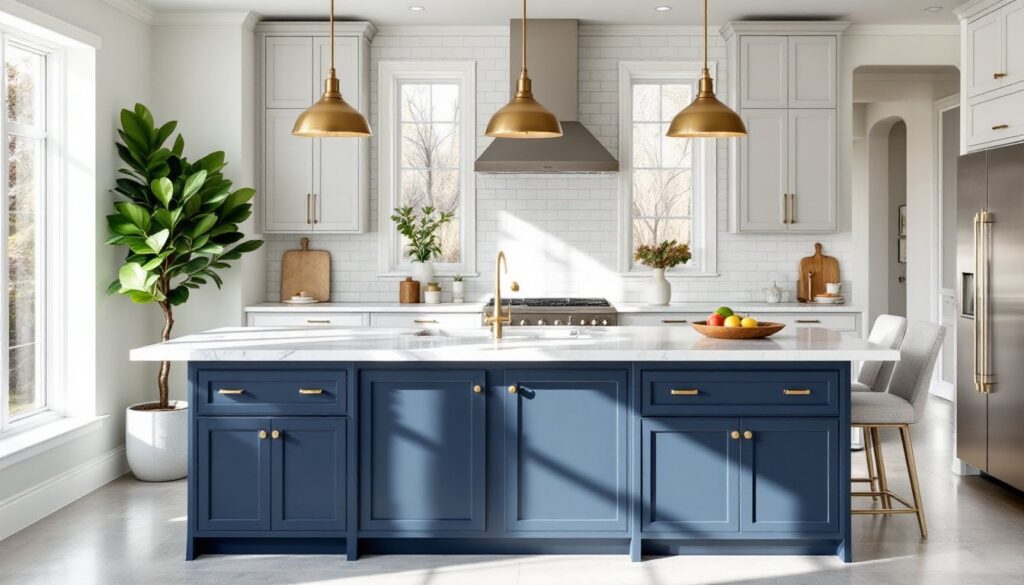
Lighting above a large island makes or breaks the decor. This is where you can be bold. A oversized pendant light cluster, three to five fixtures hung 30–36 inches above the countertop, creates visual interest and functional task lighting. Pendant styles vary: industrial metal cages, warm brass globes, frosted glass, or geometric shapes all read differently depending on your kitchen’s overall aesthetic.
For a cohesive look, match the finish to other hardware in the kitchen (cabinet pulls, faucet, range hood). If your island runs 4 feet or longer, consider two medium pendants instead of one large one: this provides better light distribution and looks intentional rather than crowded. Avoid fixtures that sit too high (you’ll lose the visual weight) or too low (they’ll feel claustrophobic and obstruct sightlines).
Alternatively, a linear suspension, a single bar holding multiple small lights, works beautifully for longer islands. This style feels modern and keeps the visual focus horizontal, which complements the island’s proportions. Install dimmers on island lighting: the ability to adjust brightness lets you shift from bright task lighting during food prep to ambient mood lighting during entertaining.
Recessed lighting alone won’t cut it. Pendant fixtures are the decor moment that ties your island to the rest of the kitchen’s design language.
Color and Finish Combinations That Work
Island color is where personality emerges. A classic approach: keep the island’s base cabinetry a bold color (navy, charcoal, sage, or even deep forest green) while the countertop remains neutral (white quartz, light gray concrete, or pale wood). This contrast prevents the island from feeling heavy, especially in smaller kitchens.
Alternatively, match the island to your perimeter cabinetry for a unified, streamlined look. This works particularly well if your cabinets are already a statement color or finish. If your cabinetry is traditional and pale, an island in a contrasting finish, natural wood, matte black, or whitewashed, adds visual weight and contemporary edge.
For the countertop, consider material longevity. Butcher block or live-edge wood brings warmth and texture but requires regular sealing and maintenance. Waterfall edge countertops (where the material cascades down the island’s side) create a high-impact visual statement and work especially well with marble, granite, or quartz. Be prepared for a premium cost and ensure your island’s design can support the overhang structurally.
Finish consistency matters. If your island base is matte, pair it with brushed metal hardware, not polished chrome. If the island is glossy, a combination of finishes (matte paint + brushed nickel + wood accents) prevents it from feeling sterile. Home renovation ideas can, and strategic color choices are the fastest way to signal that change.
Functional Decor: Seating and Stools
Seating transforms an island from work surface to gathering place. For a large island, ideally 3 feet or wider, plan for two to four bar stools on one or both sides. Measure 26–30 inches from counter to stool seat: this gives comfortable leg clearance. Space stools 26–30 inches apart (center to center) to prevent crowding.
Stool style should coordinate with your overall kitchen decor without being matchy-matchy. Upholstered stools with metal frames feel casual-modern: woven rattan or wood stools add organic warmth: industrial metal stools suit contemporary or farmhouse aesthetics. Rotate stool materials for visual interest: pair a brass-frame upholstered stool with a wood-frame rattan stool, for example.
Counter height vs. bar height matters. Standard kitchen counter height is 36 inches, so you’ll want counter-height stools (24-inch seat height). Bar-height counters (42 inches) require 30-inch stools. Mismatching these feels awkward and screams “didn’t measure.”
Choose stools with backs if your island faces a traffic zone or if you have young kids (more stable). Backless stools maximize under-counter space and feel less formal, ideal for eat-in kitchens. Swivel stools add functionality without looking like you’re trying too hard.
Don’t overcrowd. Leaving one side of the island clear for food prep or plating is smarter than installing stools all the way around. Kitchen island designs featured on Houzz showcase seating arrangements that balance function and aesthetics.
Styling with Plants and Natural Elements
Living plants on an island feel fresh and intentional. A single large potted plant (fiddle leaf fig, monstera, or similar) positioned at one end of the island provides visual punctuation without cluttering the work surface. If sunlight is limited, go with lower-light tolerant varieties: ZZ plants, pothos, or snake plants are nearly unkillable and look professional.
Small herb planters placed near the prep side of the island are both decorative and functional. Fresh basil, rosemary, and mint sit within arm’s reach during cooking. Use lightweight ceramic or terracotta pots in neutral colors (cream, natural clay, muted gray) so the plants, not the vessels, become the focal point.
Wooden elements, a butcher block countertop, open shelving brackets, or a wood-topped island base, ground the space and warm up modern kitchens. If your island is all stone and metal, layering in wood (cutting boards displayed vertically, a wooden serving board, small wooden boxes for storage) adds life.
Stone, slate, or concrete accents echo natural finishes. A concrete or bluestone countertop feels earthy and contemporary. Pair it with matte finishes rather than glossy ones to maintain that grounded aesthetic.
Keep styling minimal. Two to three plants, a wooden cutting board, and perhaps a stone or ceramic serving piece is plenty. An island buried in decor becomes a dusty clutter collector, not a design statement. Clear counter space is functional and modern-looking.
Countertop Decor and Accessories
Countertop styling is about restraint and purpose. Decorative bowls (ceramic, wood, or stone) filled with fruit, fresh flowers, or simply left empty as sculptural objects, add visual interest without consuming workspace. A wooden or marble cutting board leaned against a cabinet or countertop edge reads as intentional decor and stays functional.
Open shelving on or near the island gives you legitimate real estate for styled storage. Group items by material or color: a collection of matching glass jars with grains and dried goods, a stack of ceramic bowls in complementary tones, or cookbooks with cohesive spines. This works particularly well if your island has a base cabinet with open shelves or if you’ve installed floating shelves alongside it.
Keep the immediate prep surface relatively clear. This isn’t decor space: it’s working space. A single utensil holder or caddy for scissors, measuring spoons, and wooden spoons is practical and looks polished. Choose holders that match your color scheme, natural wood for warm kitchens, matte black for contemporary ones.
A large ceramic or stoneware planter (unplanted or with a single plant) anchors one end of the island visually. A wooden box or rattan basket for kitchen linens or cookbooks stores items while adding texture. A simple glass vase with seasonal branches or fresh flowers adds transient, affordable decor that you can change monthly.
Fresh elements matter. Change out flowers weekly or swap seasonal items quarterly. This keeps your island feeling lived-in rather than museum-like. Avoid competing patterns: stick to solid colors and natural textures so the space reads calm rather than chaotic.
Creating Visual Balance and Proportion
Scale and proportion separate polished kitchens from cluttered ones. For a large island (4+ feet), pendant lights should feel weighty, 3-5 small fixtures or 2–3 medium ones. A single tiny pendant above a long island looks lost and unfinished.
Match vertical elements to horizontal ones. If your island is wide and long, keep décor items lower and distributed evenly rather than stacking everything at one end. A tall plant at one corner can be balanced by a lower wooden bowl at the opposite corner. Think of it as visual balance on a scale.
Height variation prevents monotony. Mix tall items (pendant lights, plants, a cookbook display) with medium ones (cutting boards, bowls) and flat ones (a tablecloth or place mats, if used). This rhythm keeps the eye engaged without feeling busy.
Color distribution matters. If one side of your island is dark (navy cabinetry), add a warm wood tone or light countertop on the other side. If your pendant lights are brass, balance them with brushed nickel hardware elsewhere. Avoid concentrating all color on one end: spread accents throughout.
When in doubt, pull back. An island that feels 70% complete is better than one that’s overcrowded. You can always add items later. Living in your kitchen for a week or two before finalizing decor helps clarify what you actually use and what just gathers dust.
Reference home renovation examples and kitchens on design-focused platforms to see how successful islands balance visual interest with functional simplicity. Observe sightlines: from the kitchen entrance, from your stove, from the dining area. Every angle should feel intentional.
Conclusion
Decorating a large kitchen island comes down to honoring both form and function. The best islands are beautiful because they work smoothly, not even though their utility. Start with strong lighting and color, add purposeful seating, layer in natural elements and carefully chosen accessories, and always ensure visual balance. Measure twice, commit once, and resist the urge to overcrowd. Your island will anchor your kitchen for years, make it count.