Table of Contents
ToggleA large bedroom can feel either wonderfully spacious or awkwardly empty depending on how you design it. The challenge isn’t square footage, it’s making that space feel intentional, cohesive, and genuinely livable. Too many homeowners treat a big bedroom as a blank canvas without a plan, ending up with furniture scattered like an afterthought and cold, disconnected zones. This guide walks you through five practical design strategies that transform unused space into a retreat you’ll actually want to spend time in. Whether you’re working with a primary bedroom, guest suite, or bonus space, these approaches work because they prioritize both aesthetics and function.
Key Takeaways
- Strategic furniture placement and functional zoning eliminate dead spaces in large bedrooms by anchoring arrangements to architectural features and using area rugs to define distinct sleeping, seating, and work zones.
- A cohesive color palette using neutral bases with two to three supporting accent colors creates visual unity and prevents a large bedroom from feeling chaotic or disconnected.
- Layered lighting combining ambient, task, and accent light sources transforms both the mood and functionality of large bedroom spaces while warm-toned bulbs (2700K) enhance relaxation.
- Textured textiles—including quality bedding, curtains, throws, and strategically placed area rugs—add depth, absorb sound, and make expansive spaces feel inviting and lived-in.
- Large bedroom decor benefits from intentional wall decor such as statement art, gallery walls, and well-positioned mirrors that reflect light and fill vertical space without creating clutter.
Maximize Space With Strategic Furniture Placement
The biggest mistake with large bedrooms is spreading furniture too thin. A bed floating in the center of the room with a lonely nightstand at each corner creates dead zones and makes the space feel disjointed. Instead, anchor your furniture arrangement to the room’s architecture and natural gathering points.
Start by identifying a focal wall, usually where the bed goes. Position your bed against this wall, but not necessarily centered: asymmetrical placement often feels more intentional and leaves room for traffic flow. If you have a fireplace, window seat, or architectural feature, let that guide your layout. A window wall, for instance, becomes a natural reading nook with a chair and side table.
Create functional zones without building walls. A seating area in one corner with a sofa or two comfortable chairs, a dresser on an adjacent wall, and a work desk near a window gives the room purpose and structure. Use area rugs to define zones, a 5×8 or 8×10 rug anchors a seating area or bed arrangement without overwhelming the floor.
Create Distinct Zones Without Visual Clutter
Large rooms benefit from breaking the expanse into smaller, purposeful areas. A primary bedroom, for example, might have a sleeping zone, a sitting area, and a vanity or work corner. Each zone should have minimal furniture, too many pieces create visual chaos. One quality seating piece beats three mediocre ones.
Keep pathways clear and logical. In a room with multiple zones, ensure you can walk from the door to the bed, to the seating area, and around the room without weaving between furniture. Clear sightlines make the space feel open and functional, even when populated with multiple areas.
Choose A Cohesive Color Palette That Unifies The Room
A large space with disconnected colors reads as chaotic. A cohesive color palette, one that flows from walls to textiles to accents, makes the room feel intentional and pulls everything together visually.
Start with a neutral base for walls and larger pieces. Soft grays, warm whites, soft taupe, or pale blue create a calm backdrop that lets furniture and decor shine without overwhelming the eye. These neutrals recede, making the room feel larger and more serene. If you want more visual interest, consider a gentle accent wall, perhaps a deeper tone that complements your furnishings, but keep it subtle rather than dramatic.
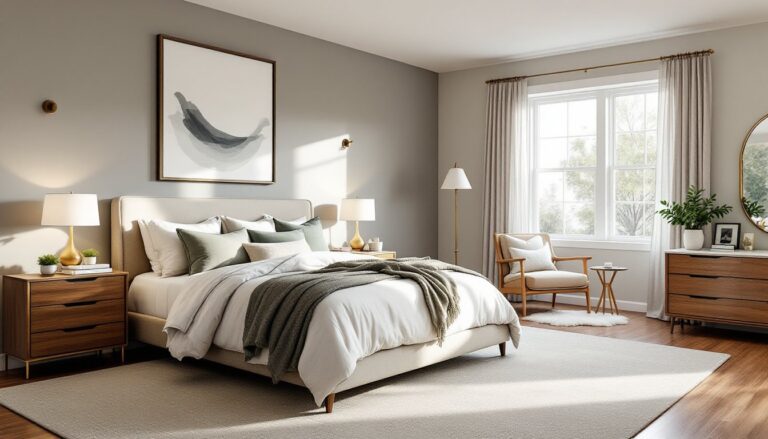
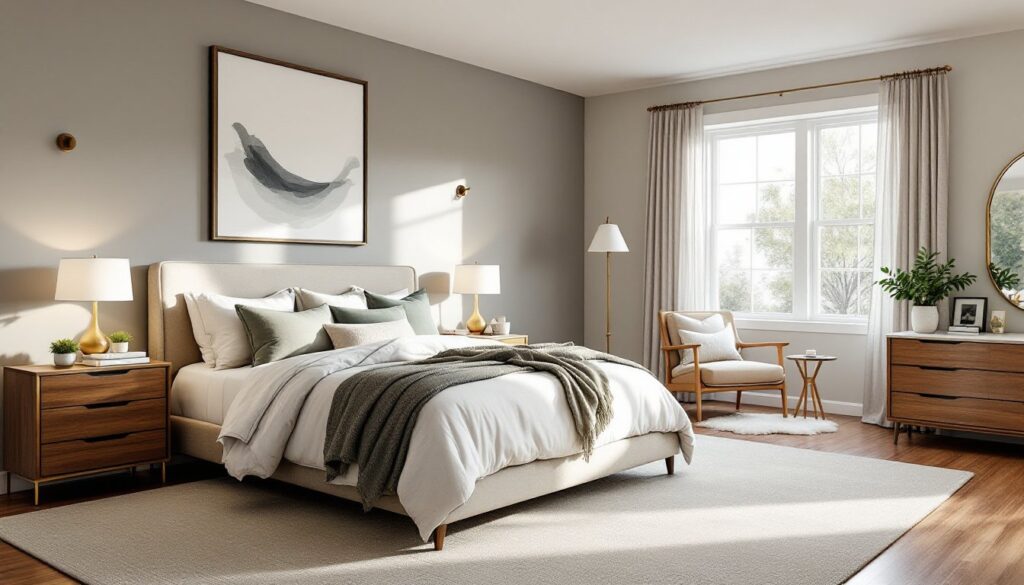
Build your palette with a primary color and two to three supporting tones. For instance, a warm gray base wall, soft white trim, natural wood furniture, and touches of sage green and warm brass create a cohesive, upscale look. Limit yourself to a maximum of four wall colors or tones: beyond that, the eye doesn’t know where to rest. Design publications like House Beautiful showcase how carefully curated palettes unify large spaces without monotony.
Use darker colors sparingly. A charcoal dresser or dark wood frames anchor the room and add sophistication, but keep these accents to one or two pieces. Too many dark elements in a large space can feel heavy and fragmentary. Let your color scheme inform your textile choices, paint selections, and even hardware finishes, matching warm brass with warm whites and soft golds, for example, creates visual harmony.
Add Layered Lighting For Ambiance And Functionality
Poor lighting is the fastest way to kill a large bedroom’s potential. A single ceiling fixture casts harsh shadows and doesn’t provide flexibility. Layered lighting, combining ambient, task, and accent lighting, transforms the room’s mood and function.
Start with ambient lighting: recessed ceiling lights or a flush-mount fixture that provides overall illumination without glare. This is your baseline, bright enough for cleaning or finding items, but not so harsh it feels institutional. Aim for about 1.5 watts per square foot for bedroom spaces, adjustable with dimmer switches.
Add task lighting where you need it. Bedside table lamps flank the bed for reading and offer a softer glow than overhead lights. A desk lamp illuminates a workspace. A vanity mirror with integrated lighting or adjustable sconces serves practical needs while adding visual interest. These lights should be warm-toned (2700K color temperature) for relaxation rather than cool white.
Incorporate accent lighting to define zones and add ambiance. Wall sconces flanking art, uplighting behind a headboard, or a small decorative lamp on a dresser create visual depth and warmth. In a seating nook, a floor lamp casts inviting light and defines the area. Layer in smart bulbs or dimmer switches so you can adjust from energizing morning light to a dim, relaxing evening glow. Consider how lighting from interior design resources recommends balancing form and function, the best fixtures look good while doing their job.
Incorporate Textiles And Textures For Depth And Comfort
Textiles soften a large space and make it feel lived-in and inviting. A bed with just a flat sheet feels incomplete: add a quality comforter, throw pillows, and a weighted throw blanket across the foot, and suddenly it’s a destination. Textiles absorb sound, too, which keeps a big room from echoing.
Start with bedding in your color palette. A neutral duvet (cotton, linen, or a linen-cotton blend) pairs with colored or patterned shams and accent pillows. Mix textures: smooth cotton with plush velvet, quilted fabrics with smooth linen. Aim for four to six pillows on a queen or king bed, arranged in descending size from the headboard forward, it looks intentional and inviting.
Add layered textiles beyond the bed. Curtains frame windows and define the vertical space: linen or linen-blend curtains have a modern, relaxed feel, while heavier fabrics add luxury and sound dampening. An upholstered headboard (tufted, nailhead trim, or simple) adds visual weight and comfort. A throw blanket draped over a chair or the foot of the bed introduces texture and invites relaxation.
Use area rugs strategically. A large area rug (8×10 or larger) anchors the bed and seating areas, defining zones while softening the hard floor beneath. Layer smaller accent rugs in seating nooks. Natural fiber rugs (jute, wool) add warmth and texture. Match rug edges to your color palette, a neutral rug works almost everywhere, while a subtle geometric or pattern can echo your accent colors without overwhelming the space.
Use Wall Decor And Accessories To Define Style
Bare walls in a large room feel sparse. Wall decor, artwork, and intentional accessories fill the vertical space and reflect your style without cluttering horizontal surfaces.
Start with a gallery wall or statement art above the bed or a focal wall. A large framed piece (48–60 inches wide) commands attention and anchors the room. Alternatively, a curated gallery wall with three to five framed pieces in coordinating frames and mats creates visual interest and personality. Stick to your color palette, black and white photography, botanical prints, or abstract pieces that echo your accent colors all work beautifully. Interior design leaders like Elle Decor demonstrate how thoughtful wall arrangements transform empty walls into design focal points.
Add floating shelves or a console table for both display and function. A narrow console behind a sofa or along a wall holds a table lamp, decorative objects, and books. Open shelving above a dresser displays folded textiles, framed photos, or a small collection. Keep shelves edited, a few meaningful objects beat a crowded, dusty pile.
Incorporate mirrors strategically. A large mirror opposite a window reflects light and makes the room feel larger and brighter. A decorative mirror propped on a dresser or hung on a wall adds visual interest while serving a practical function. Mirrors with interesting frames, metal finishes, wood, or carved details, become accessories in their own right.
Choose accessories with intention. A table lamp with an interesting base, a potted plant or two, framed art books, or decorative objects in your color palette add personality without clutter. Rotate seasonal accents to keep the room fresh. Display items on dressers, shelves, and nightstands, but leave breathing room, a crowded surface reads as cluttered and stressful.
Conclusion
Transforming a large bedroom into a retreat isn’t about filling every inch, it’s about intentional choices that create zones, flow, and visual harmony. Strategic furniture placement, a cohesive color palette, layered lighting, textured textiles, and thoughtful wall decor work together to make the space feel both spacious and intimate. Start with one strategy, then build from there. Within a few focused adjustments, your oversized bedroom shifts from empty to inviting.