Table of Contents
ToggleAn island range hood isn’t just functional ventilation, it’s a design anchor that pulls your kitchen together. Whether you’re installing your first hood or upgrading an existing one, the style you choose affects both the look and the workflow of your space. In 2026, island range hood designs span from industrial stainless steel to warm farmhouse aesthetics, giving homeowners real flexibility. This guide breaks down the most practical and visually compelling options, helping you make a choice that fits your kitchen’s layout, your budget, and your hands-on timeline.
Key Takeaways
- Island range hood designs in 2026 span from industrial stainless steel to warm farmhouse aesthetics, serving as both functional ventilation and a visual design anchor in your kitchen.
- Proper CFM (cubic feet per minute) rating is critical—most residential kitchens need 100 CFM per linear foot of cooktop, with a 36-inch range typically requiring 300–400 CFM to prevent lingering odors and grease buildup.
- Island range hoods come in multiple styles including stainless steel (durable and modern), rustic farmhouse (warm with wood and metal accents), minimalist (clean lines and slim profile), and glass-and-metal combinations (contemporary with easy visibility).
- Island hood sizing and placement must match or slightly exceed your cooktop width, hang 24–30 inches above the surface, and have clear ceiling pathways for ductwork routing to avoid costly installation complications.
- Budget island hoods range from $200–$600 with basic finishes, mid-range options cost $600–$1,500 with improved quality and design, while premium models ($1,500–$4,000+) offer commercial-grade motors and distinctive finishes—plus factor in separate installation costs of $500–$1,200 or more.
- Prioritize ducted ventilation systems over recirculating models for effective odor and steam removal, and invest in adequate CFM performance rather than cutting costs, since undersizing creates long-term maintenance and air quality problems.
Why Island Range Hoods Are Essential for Your Kitchen
An island range hood pulls cooking odors and steam directly upward and out of your kitchen, protecting both your cabinetry and your air quality. Unlike wall-mounted hoods, island hoods are mounted to the ceiling above a cooktop or range positioned away from perimeter walls, a layout that maximizes both cooking space and kitchen flow.
Ventilation performance matters. A hood’s CFM (cubic feet per minute) rating determines how fast it can clear smoke and steam. Most residential kitchens need 100 CFM per linear foot of cooktop: a 36-inch range typically requires 300–400 CFM. Undersizing a hood leads to lingering odors and grease buildup on walls and ceilings.
Beyond function, island hoods are visual statements. They hang in plain sight, so their design either enhances or detracts from your kitchen’s aesthetic. That’s why choosing the right style, stainless, farmhouse, minimalist, matters as much as CFM and ductwork routing. The hood will likely be one of the first things people notice when they walk into your kitchen.
Stainless Steel Island Hoods: Sleek and Timeless
Stainless steel island hoods work in contemporary, transitional, and industrial kitchens. They’re durable, easy to clean (with the right cloth, microfiber and stainless steel cleaner prevent streaking), and pair naturally with stainless steel appliances and hardware.
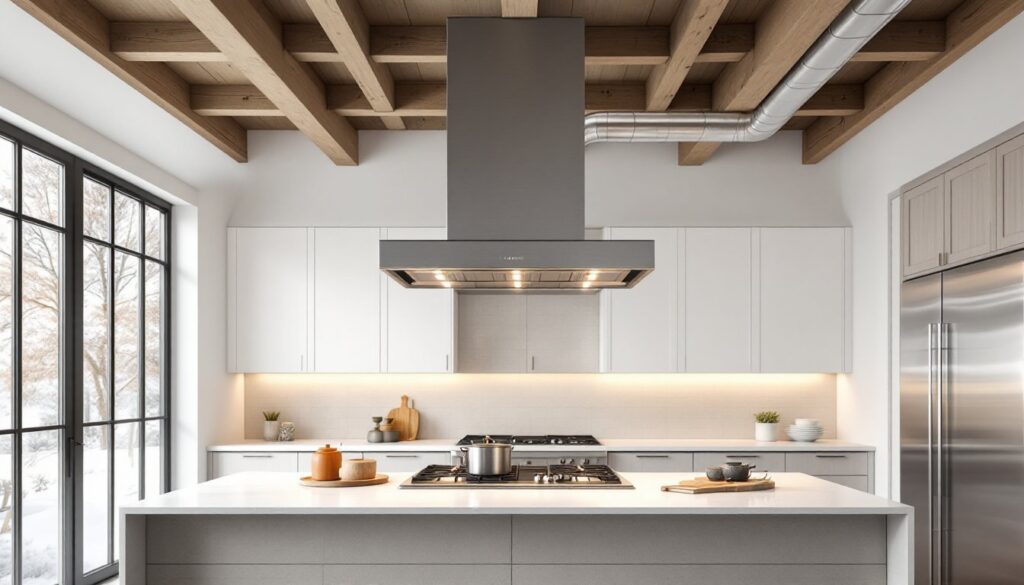
Modern stainless hoods often feature clean lines with minimal ornamentation. A simple rectangular canopy, brushed or polished finish, and concealed ductwork create an understated look. Some designs add a professional chef-style perforated metal or mesh front, which is both functional and visually interesting. These hoods typically range from 30 to 48 inches wide.
One practical consideration: stainless steel requires regular upkeep. Fingerprints and water spots show easily on polished finishes. Brushed stainless is more forgiving and is becoming the standard choice for busy kitchens. Research from The Kitchn highlights that homeowners often underestimate the maintenance side of high-polish finishes, so plan accordingly.
Installation usually requires running ductwork through the ceiling cavity to an exterior wall or roof. If your kitchen sits on an upper floor with limited attic space, this can be challenging and may require professional HVAC routing.
Rustic and Farmhouse Island Hood Designs
Rustic island hoods lean into warmth and character. Wood corbels, wrought iron accents, or copper details are common. The canopy often features a wider profile and sometimes a sloped or decorative crown top. Finishes include hammered copper, oil-rubbed bronze, and matte black, all of which age beautifully and hide fingerprints well.
Farmhouse hoods pair especially well with reclaimed or distressed wood beams, vintage lighting, and open shelving. A cream or painted wood hood with a black metal trim creates a classic farmhouse frame. Copper hoods develop a patina over time, which many homeowners appreciate as part of the aesthetic.
One trade-off: decorative corbels and detailed crown tops collect dust and grease more readily than smooth, minimalist designs. Plan to wipe them down during monthly kitchen cleaning. If you choose a wood-framed hood, confirm the wood is rated for kitchen use and treated to resist moisture and steam. Cedar, pine, and walnut are common choices.
Farmhouse hoods often match or coordinate with kitchen islands that have similar styling. This cohesion is worth planning for when you’re selecting materials. A comprehensive look at farmhouse and rustic inspiration is available through Remodelista, which curates high-quality design references.
Modern Minimalist Island Range Hoods
Minimalist island hoods prioritize clean geometry and simplicity. Think flat panels, no visible fasteners, integrated lighting, and a slim profile. Materials are typically stainless steel, matte black, or white powder-coated metal. The goal is a hood that ventilates powerfully without visually dominating the space.
A popular trend is the low-profile or nearly invisible hood. Modern kitchen islands often feature smart concealment: the hood sits flush with the ceiling line, or features a subtle canopy that blends with overhead cabinetry. Some designs incorporate LED strips that light the cooktop without adding visual bulk.
Glass and Metal Combinations
Glass and metal pairing has gained traction in contemporary kitchens. A stainless or black metal frame houses a tempered glass panel, usually on the back or sides. This design lets you see the cooktop clearly while containing spray and steam. Glass also reflects light, making smaller kitchens feel airier.
Tempered glass is rated for kitchen heat and is easy to clean with standard glass cleaner. But, glass hoods require more frequent cleaning than solid canopies to avoid a cloudy or fingerprinted appearance. Some models feature frosted or textured glass, which masks smudges better than clear.
installation of glass-front hoods demands precision. The frame must be level and square, and any mounting brackets need to support the glass weight safely. This is a good candidate for professional installation if you’re not comfortable with precise ceiling-mounted work.
Choosing the Right Size and Installation Considerations
Sizing an island hood correctly is non-negotiable. The hood width should match or slightly exceed your cooktop width, a 36-inch cooktop pairs with a 36- or 42-inch hood. Undersizing leaves cooking vapors uncontained: oversizing wastes energy and can look out of proportion.
Height matters too. Island hoods typically hang 24 to 30 inches above the cooktop surface to capture heat and smoke without interfering with cooking or line-of-sight at the range. Verify your hood’s manufacturer specs: some require a minimum clearance, especially if the hood includes halogen or incandescent lighting.
Ductwork routing is the hidden challenge. Island hoods must route ductwork vertically (through the ceiling cavity) and then horizontally to an exterior wall or roof. You need clear pathways through joists, blocking, and second-story floors. If your home has ductwork congestion, HVAC trunks, plumbing, electrical, rerouting can add complexity and cost. A licensed HVAC contractor is worth the consultation fee here.
Make sure your cooktop placement allows the hood to mount safely to ceiling framing. Joists must sit directly above the proposed hood location, no spanning between joists. If you’re renovating and can move the island, check ceiling structure before finalizing the layout.
Ventilation style also matters. Ducted hoods vent outdoors (most effective). Recirculating hoods filter air and return it indoors (lower cost, less effective for heavy cooking). New construction and major remodels should prioritize ducted systems. A photo gallery of island hood installations and configurations is available at Houzz, which can help you visualize ductwork concealment and hood placement relative to cabinetry.
Budget-Friendly vs. Premium Island Hood Options
Island hood pricing spans a wide range. Budget hoods ($200–$600) are typically compact, ducted or recirculating models with basic stainless or black finishes and mechanical controls. They work fine for occasional cooks and smaller kitchens, but noise levels run higher and filter lifespan may be shorter.
Mid-range hoods ($600–$1,500) offer better CFM ratings, quieter operation, touch controls or remote switches, and more finish options. Stainless steel quality improves at this tier, and you’ll find more design variation, farmhouse accents, copper finishes, wood-frame options.
Premium models ($1,500–$4,000+) feature commercial-grade motors, noise levels under 40 decibels, integrated smart controls, LED lighting, and distinctive design finishes (hammered copper, custom paint, mixed materials). These are often the choice for high-end remodels or open-concept homes where the hood is a focal point.
Factor in installation costs separately. A straightforward ductwork run might cost $500–$1,200 in labor. Complex routing, ceiling reinforcement, or structural modifications can push this higher. For most DIYers, the hood itself is doable, but ductwork and electrical hookup are worth hiring out.
Don’t cheap out on CFM rating to save money. An undersized hood creates long-term regrets, cooking becomes less pleasant, and grease accumulates on walls. Spend appropriately on ventilation performance: design choices can flex within budget.