Table of Contents
ToggleHaier smart home technology is reshaping how homeowners live and manage their daily routines. If you’ve walked through a modern home recently, you’ve likely seen connected appliances, voice-activated controls, and systems that work together seamlessly. Haier, one of the world’s largest appliance manufacturers, brings that integration to your fingertips. Whether you’re upgrading an older kitchen, improving climate control, or simply curious about what’s possible with today’s connected devices, understanding what Haier offers can help you make smarter decisions about your home’s future. This guide walks you through the essentials, no jargon overload, just practical information to get you started.
Key Takeaways
- Haier smart home technology lets your appliances communicate with each other and you via smartphone, voice commands, or automated schedules, reducing manual tasks and improving daily efficiency.
- Smart kitchen appliances like refrigerators with inventory tracking and smart thermostats that learn your preferences can save 10–15% on energy bills within the first year.
- Haier’s integrated approach uses a single app and account for all connected devices, eliminating the need to manage multiple interfaces and reducing complexity.
- Set up your smart home system one device at a time starting with your most-used appliance, ensure stable Wi-Fi coverage, and add voice assistant integration only after devices are reliably connected.
- Smart home systems improve quality of life through conveniences like checking laundry status remotely and can boost home resale value, especially in markets expecting modern conveniences.
What Is Haier Smart Home Technology?
Haier smart home technology lets your appliances and systems talk to each other and to you, via smartphone, voice command, or automated schedules. Instead of a refrigerator that just keeps food cold, a Haier smart fridge can notify you about grocery shortages, sync recipes, and adjust temperature zones based on what’s stored. Climate systems learn your preferences and adjust heating or cooling without you touching a thermostat. The core idea is simplification: fewer manual tasks, more control, and data that helps you make better decisions about energy use and home maintenance.
The technology relies on a hub or app that serves as the command center. Most Haier devices connect via Wi-Fi or Bluetooth, and many integrate with popular voice assistants like Alexa or Google Home. Security is built in, encrypted connections and user authentication prevent unauthorized access. Unlike some smart home ecosystems that force you to replace everything at once, Haier products work modularly. You can start with a smart thermostat and smart washer, then add other devices as your budget allows. This flexibility makes adoption less overwhelming and more practical for real homeowners living real lives.
Key Smart Home Devices Haier Offers
Haier’s product lineup spans the kitchen, laundry room, and climate control. Each category addresses specific pain points, whether that’s meal prep, energy efficiency, or comfort management. Understanding what’s available helps you prioritize which upgrades fit your needs and budget.
Smart Kitchen Appliances
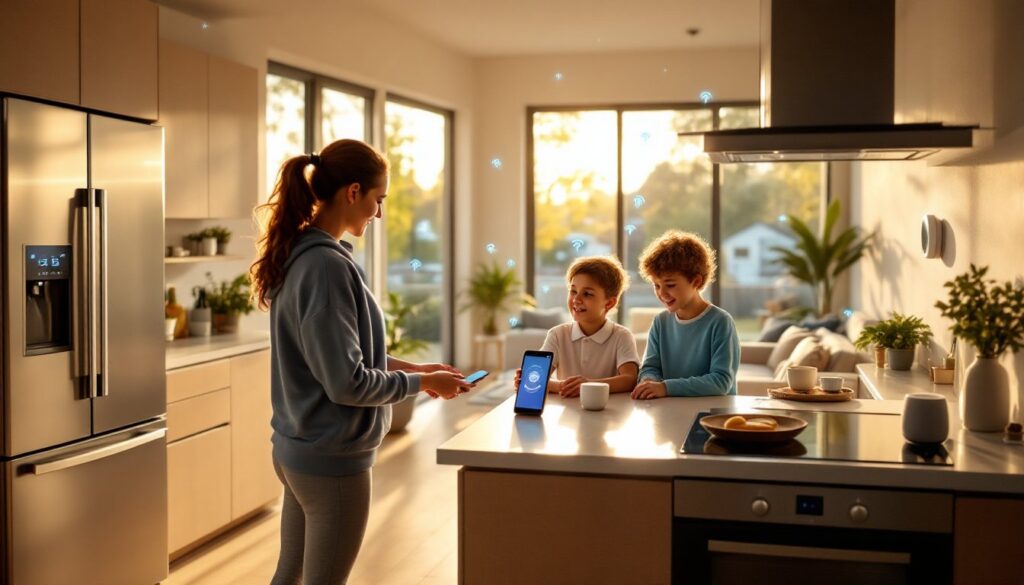
Haier’s smart kitchen range includes refrigerators, dishwashers, range hoods, and cooktops. A Haier smart refrigerator tracks food inventory, suggests recipes based on what’s inside, and alerts you when items near expiration. Some models include a built-in camera so you can check contents from the grocery store. The real value isn’t the novelty, it’s the reduction in food waste and time spent meal planning. Smart dishwashers adjust wash cycles based on load weight and soil sensors, cutting water and energy use. Range hoods with smart sensors activate automatically when cooking and adjust fan speed to maintain air quality. These appliances integrate with a central app, so you’re not managing ten separate interfaces. The kitchen remains the home’s most functional space: smart devices here save time and money in measurable ways.
Climate Control and Heating Systems
Haier smart thermostats and HVAC systems learn your schedule and preferences, then adjust temperature automatically. Unlike traditional programmable thermostats that force you to set time blocks, smart systems use occupancy sensors and weather forecasts to optimize heating and cooling in real time. A Haier smart thermostat typically includes a touchscreen or app interface, integrates with voice assistants, and provides detailed energy reports showing which times of day drive up heating or cooling costs. This data lets you make informed decisions, maybe you realize keeping the house at 72°F while you’re at work costs $30 extra per month: dropping it to 68°F when you leave saves money without sacrificing comfort when you’re home. Zoning systems let you heat or cool specific rooms, reducing energy waste in areas you don’t use. For homeowners in variable climates or with large houses, smart climate control often pays for itself within 2–3 years through reduced utility bills.
How to Set Up Your Haier Smart Home System
Setting up Haier smart devices is straightforward if you follow a logical order. Start by downloading the Haier U+ app (or your regional equivalent), creating an account, and ensuring your home Wi-Fi is stable and has adequate coverage. Weak Wi-Fi is the #1 reason smart home setups fail, devices drop offline or respond slowly, frustrating you into giving up. If your router doesn’t reach the garage or far bedroom, consider a Wi-Fi extender or mesh system before adding smart devices.
Next, add devices one at a time rather than all at once. Start with your most-used appliance, for many people, that’s the thermostat or refrigerator. Put the device in pairing mode (usually by holding a button or tapping an option in the app), then follow the app’s step-by-step instructions. The device will prompt you to confirm your Wi-Fi network and password. Once connected, the app will update it with the latest firmware automatically. Repeat for each additional device. Don’t skip this step: outdated firmware can cause connectivity issues or missing features.
Integrate voice assistants last, after all devices are working reliably in the app. Link your Haier account to Alexa or Google Home, then enable individual device controls. Test voice commands, say “Alexa, set the thermostat to 70 degrees” or “Google, turn on the kitchen fan.” Some commands work better than others depending on the device and voice assistant: this is normal. Finally, set up automations: perhaps your coffee maker brews 15 minutes before your alarm, or the thermostat lowers the temperature at 11 PM each night. Automations are optional but often provide the “wow” factor that makes the initial setup effort worthwhile. Take time to explore the app’s reporting features too, seeing exactly how much energy you’re saving reinforces the value of your investment.
Why Haier Smart Home Works for Modern Homeowners
Haier’s smart home ecosystem appeals to homeowners for several practical reasons beyond novelty. First, the company has decades of experience manufacturing reliable appliances, so durability and customer support are credible. Unlike some smart home startups that disappear or discontinue products, Haier’s scale means long-term software support and spare parts availability. If your smart fridge needs a repair in three years, you won’t be stuck hunting for an obsolete component.
Second, Smart Home Devices: A Comprehensive Guide to Modern Connected Living explains that a major barrier for many homeowners is complexity, managing multiple brands or ecosystems. Haier’s integrated approach simplifies this. All devices use the same app, the same account, and work together seamlessly. You’re not juggling a separate app for your thermostat, another for your fridge, and another for your washer. This unified experience reduces friction and makes it more likely you’ll actually use the system’s features instead of abandoning it.
Third, energy savings are real and measurable. How to Set Up Smart Home Devices: A Beginner’s Guide highlights that homeowners often save 10–15% on energy bills within the first year of adopting smart climate control and efficient appliances. That’s not a trivial number, if your household spends $2,000 annually on utilities, a 10% reduction saves $200 per year. Over five years, that’s $1,000 in savings, often exceeding the upfront cost of the smart devices themselves. Haier publishes energy ratings for its appliances, so you can compare efficiency before buying. Fourth, smart home systems improve quality of life beyond money. Coming home to a warm house on a cold evening, checking your laundry status from work, or receiving an alert that the dishwasher has finished, these conveniences accumulate and make daily routines less tedious. For families with busy schedules, elderly residents, or people managing multiple properties, smart home automation is less a luxury and more a practical advantage. Finally, Smart Home Devices for notes that home resale value can benefit from smart features, especially in markets where buyers expect modern conveniences. While not a guarantee, homes with documented smart systems and energy-efficient appliances often appraise higher than comparable homes without upgrades.
Conclusion
Haier smart home solutions offer a realistic path to upgrading your living space without overwhelming complexity or very costly. Start small, prioritize the devices that solve your biggest pain points, and expand as you grow comfortable with the system. The combination of reliable hardware, intuitive software, and measurable savings makes Haier a solid choice for homeowners ready to embrace connected living in 2026.