Table of Contents
ToggleYour entryway is the first thing guests see when they walk through your door, and it’s also the first thing you see when you come home. A large entryway offers a golden opportunity to make a statement, but it also presents a design challenge. Empty space can feel cold or cluttered if not handled thoughtfully. The key to nailing large entryway ideas is striking a balance between functionality and style. This guide walks you through seven design strategies that work with your space instead of against it, turning that generous square footage into a welcoming, organized, and visually interesting arrival point.
Key Takeaways
- Large entryway ideas succeed when you balance lighting, statement pieces, and smart storage to transform an empty space into a welcoming focal point.
- Layer multiple light sources—chandeliers, wall sconces, and recessed lighting—using warm color temperatures (2700–3000K) with dimmers to set an inviting mood.
- Anchor your entryway with one or two hero pieces like a solid wood console table or sculptural coat rack rather than filling every corner.
- Integrate functional storage such as benches with built-in compartments, tall shoe cabinets, or wall-mounted shelving to keep your entryway organized and clutter-free.
- Use accent wall colors, patterned wallpaper, and durable flooring like tile or luxury vinyl plank to create visual interest without overwhelming the space.
- Mix materials and textures—combining wood, metal, stone, and natural fibers with different finishes—adds depth and prevents your large entryway from feeling sterile or flat.
Maximize Lighting for an Open, Welcoming Atmosphere
A large, dimly lit entryway feels like a cave. Light is your first tool for making the space feel intentional and inviting.
Start by assessing your natural light. If you have windows or a glass door, lean into it, don’t block it with heavy curtains. Sheer panels or no window treatments at all let daylight flood in and set a bright tone from the moment someone enters.
For artificial light, layer your sources. A central chandelier or pendant fixture serves as the anchor, while wall sconces flanking a mirror or console table add depth and soften shadows. Consider recessed lighting or track lights if you want flexibility to highlight specific zones, artwork, a statement piece, or a seating area.
Choose warm color temperatures (2700–3000K) for a welcoming feel, not the harsh blue-white of office lighting. Dimmers are worth the small extra cost: they let you adjust mood throughout the day. If you’re upgrading fixtures, remember that oversized spaces can handle proportionally larger pendants or chandeliers, a small fixture in a soaring 15-foot ceiling will disappear.
Choose Statement Pieces That Define Your Style
A large entryway gives you room to make a bold choice without overwhelming the space. This is where a standout console table, a sculptural coat rack, or an eye-catching rug anchors the room.
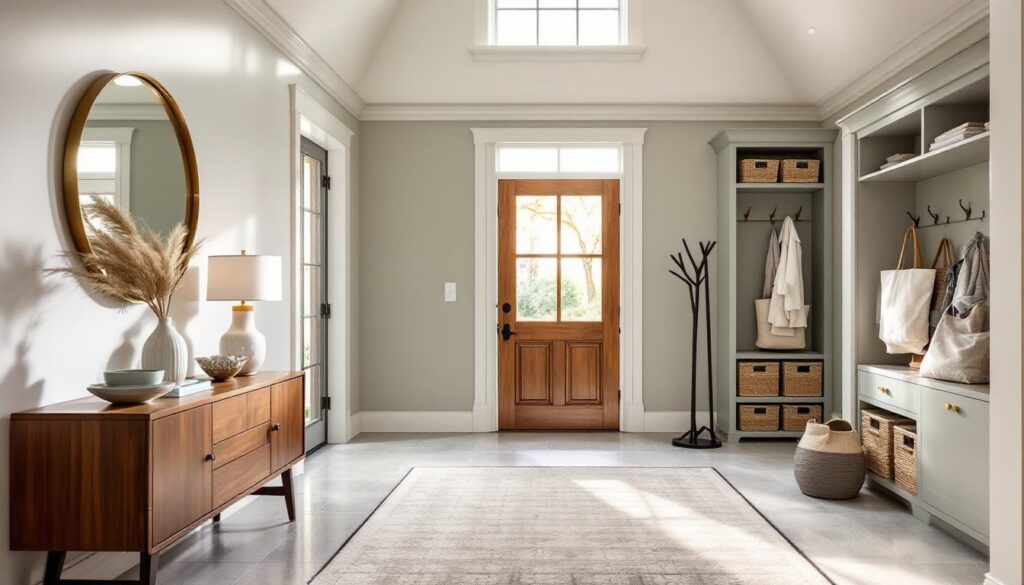
Choose one or two hero pieces rather than filling every corner. A solid wood console table in walnut or oak gives warmth and provides practical surface space for keys, mail, and a decorative arrangement. Alternatively, a sleek modern console in metal and glass strikes a different note. Pair it with a statement lamp or a large vase to add height and visual interest.
A sculptural coat rack can double as art, look for cast iron, brass, or handcrafted wood designs. It’s functional and a conversation starter. The scale matters: in a generous entryway, a tall, bold piece won’t look out of place.
Oversized Mirrors and Artwork
A large mirror (48 inches or taller) opposite your entry door creates the illusion of more space and bounces light throughout the room. Gold, black, or natural wood frames add warmth: ornate frames suit traditional spaces, while sleek metal frames work with contemporary styles.
Artwork or photography hung at eye level (57–60 inches from floor to center) creates a focal point. In a big entryway, a single large piece (36×48 inches or larger) works better than a small grouping. If you lean toward gallery walls, commit to it fully with 5–7 pieces in a cohesive arrangement. Ensure frames are substantial enough to feel intentional in the space.
Organize Function With Smart Storage Solutions
A beautiful entryway that can’t store coats, shoes, and umbrellas becomes a catch-all mess within weeks. Design storage in from the start.
Benches with built-in storage (typically 48–60 inches wide) seat someone while providing space for seasonal items below. Look for solid wood or upholstered options with hinged lids. Pair one with a row of hooks or a coat rack above for outerwear.
If you have wall space, a tall shoe cabinet (72–84 inches high) holds 15–20 pairs neatly and keeps dust off. Open shelving works visually but requires regular tidying: closed cabinets hide clutter. A console table with drawers combines form and function, surface space for decor, hidden storage below.
Measure your entryway carefully. A 12-foot-wide space might accommodate a 5-foot bench plus a tall cabinet with breathing room. A narrower 8-foot hallway demands a slimmer bench or wall-mounted options only.
Built-In Shelving and Coat Racks
Built-ins are a permanent solution if you own your home and want a polished look. A wall of open shelving (3–5 shelves, 9–12 inches deep) accommodates baskets for shoes and accessories while displaying decorative items. Paint the backing wall a contrasting color (soft gray, navy, or warm white) to add definition.
Hooks are underrated. Install a row of brass, stainless steel, or matte black hooks at 72 inches from the floor, high enough that coats hang free of shoulder traffic. Space them 16–18 inches apart. For a heavy-use entryway, expect to install 4–6 hooks minimum.
If you’re renting or hesitant about permanent changes, freestanding coat racks and wall-mounted shelves with brackets (no studs required if using heavy-duty anchors) give flexibility. Just ensure any freestanding piece sits securely on your flooring and won’t tip.
Use Color and Flooring to Create Visual Interest
Color can transform a blank entryway. The best approach depends on the rest of your home’s palette, but in an entryway, you have freedom to experiment.
Paint one accent wall in a warm, saturated tone, terracotta, sage green, deep navy, or charcoal. This draws the eye and creates drama without committing the whole room. Ensure your chosen color works with your floor and door frame. A matte or eggshell finish works best: glossy finishes show dust and fingerprints in high-traffic areas.
Alternatively, patterned wallpaper (geometric, botanical, or subtle texture) adds sophistication. Choose a durable, wipeable option in an entryway: standard paper won’t survive coat zippers and dust.
Flooring is both functional and aesthetic. Tile or natural stone (slate, limestone, or porcelain) resists moisture, grit, and scuffs, ideal for entryways. Neutral tones (gray, beige, charcoal) hide dirt: lighter options feel airier but require more frequent cleaning. Luxury vinyl plank (LVP) mimics wood or stone, costs less, and handles traffic well. Hardwood looks warm and traditional but scratches more easily and needs sealing in wet climates.
A large area rug (4×6 feet or bigger) anchors the space, softens hard flooring, and defines the entryway zone if it flows into an open living area. Choose a durable, low-pile rug in a color or pattern that complements your accent wall. Ensure the rug is rated for high traffic and easy to clean, machine-washable options save headaches.
Layer Textures and Materials for Depth
A visually interesting entryway feels curated, not sterile. Layer different materials and finishes to add depth and warmth.
Mix matte and shiny surfaces: a glossy console table paired with a matte mirror frame, or a brass hook against a painted wood wall. Combine wood, metal, and stone so no single material dominates. A wooden bench with metal legs, a stone or tile floor with a natural fiber rug, and fabric cushions create a balanced mix.
Textiles matter. A linen runner or wool area rug softens hard floors. Throw pillows on a bench add comfort and color without fussiness. Woven baskets (seagrass, rattan, or wicker) store items while introducing organic texture that feels warm and inviting. Resources like MyDomaine showcase how mixing materials creates sophisticated, livable spaces.
Wall treatments contribute too. Beyond paint or wallpaper, consider shiplap, tongue-and-groove, or textured plaster for visual interest. A wood accent wall adds rustic warmth: a stone or brick feature wall (or faux options) introduces industrial edge. These finishes also help define a large, open entryway and prevent it from feeling like a blank hallway.
In a 15×12-foot entryway, you’ve got room for a painted accent wall, a console in natural wood, brass fixtures, a patterned rug, and woven baskets. The variety of materials prevents the space from feeling flat, and each element serves a purpose.
Bringing It All Together
A large entryway doesn’t have to intimidate. By prioritizing light, anchoring the space with statement pieces, building in smart storage, playing with color and flooring, and layering textures, you create an arrival point that’s both beautiful and functional. Start with what matters most to your daily life, if you need shoe storage, build that in first, then layer design choices around it. Your entryway should reflect how you live, not be a showroom you’re afraid to use. The designs featured on House Beautiful and Freshome demonstrate how thoughtful planning transforms entryways into spaces your whole household, and your guests, will genuinely appreciate.