Table of Contents
ToggleBasement floors take a beating, moisture, temperature swings, and heavy foot traffic make them tough customers. But a worn concrete slab or dingy tile doesn’t mean you’re stuck with an unfinished dungeon. Smart homeowners are ditching expensive hardwood and marble in favor of durable, affordable solutions that actually handle basement conditions better. Whether you’re finishing a rec room, creating a gym, or just want to stop cringing at your concrete floor, the 2026 flooring market offers real budget options that don’t look cheap. This guide covers five proven approaches, plus installation shortcuts to keep costs down.
Key Takeaways
- Luxury vinyl plank flooring costs $2–$5 per square foot and provides superior moisture resistance, making it the top inexpensive basement flooring choice for durability and style.
- Epoxy coating transforms concrete for just $1–$3 per square foot, but requires meticulous surface prep and proper humidity control to ensure a successful, long-lasting finish.
- DIY installation of vinyl plank flooring can cut costs in half compared to professional installation, though proper moisture testing before any install is critical to avoid costly replacements.
- Moisture control is more important than material choice—basements with moisture readings above 3 pounds per 1,000 square feet per 24 hours need vapor barriers or drainage fixes before flooring.
- Carpet tiles and rubber flooring offer comfort at $1–$4 per square foot, but work best in dry basements and mask rather than address underlying moisture issues.
- Match your inexpensive basement flooring material to your space’s purpose and moisture profile: rec rooms and offices suit LVP or tile, while gyms benefit from rubber flooring.
Vinyl Plank Flooring: Affordable Durability and Style
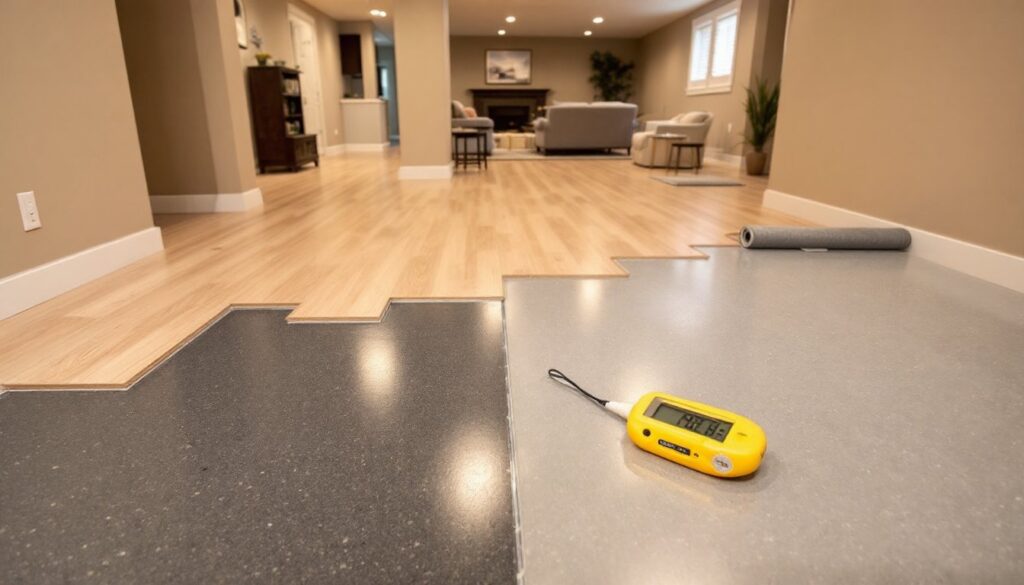
Luxury vinyl plank (LVP) has become the go-to basement choice for good reason. It costs $2 to $5 per square foot (material only) and handles moisture like a champ, far better than real hardwood or laminate. The core is waterproof, so spills and humidity won’t swell or warp it.
LVP mimics wood, stone, or tile convincingly. A 1,200-square-foot basement might run $2,400 to $6,000 in materials, depending on quality tier. Mid-range products hold up better than ultra-cheap options: look for 5mm+ thickness with a sturdy wear layer. Installation is straightforward: planks click together (floating floor), so you don’t need adhesive.
The catch? Cheap LVP can feel hollow underfoot or fade in bright light. Read reviews and choose rigid core (SPC or WPC) for basements with older concrete or minor cracks. Underlayment isn’t always necessary but adds comfort and masks imperfections, worth the extra $50 to $200.
Epoxy Coating: Low-Cost Protection for Concrete Floors
If you’re embracing the concrete rather than covering it, a quality epoxy coating transforms a dull slab into a sealed, attractive surface for $1 to $3 per square foot. A gallon typically covers 250–350 square feet, so a 1,200-square-foot basement needs 3–5 gallons (roughly $150 to $400 in material).
Epoxy is a two-part system: resin plus hardener. When mixed and poured, it chemically bonds to concrete and cures to a tough, glossy finish. It resists moisture, stains, and light traffic brilliantly. Decorative chips can be broadcast onto wet epoxy for texture and visual interest at minimal extra cost.
Critical prep: Concrete must be clean, dry, and free of sealers or wax. Grind or acid-etch the surface so epoxy grips properly. Humidity above 85% or temperatures below 50°F will ruin the cure. A failed epoxy job is painful, don’t rush this. This is a good option for a polished, industrial look, but it’s slippery when wet, so skip it for high-traffic areas without anti-slip additives.
Tile and Polished Concrete: Practical Budget Options
Ceramic or porcelain tile works well in basements if you accept the cold, hard feel. Budget ceramic runs $0.50 to $2 per square foot, plus grout and adhesive. Porcelain (more durable, less porous) costs $1 to $4 per square foot. Large-format tiles (12×24 inches or bigger) require flatter subfloors and faster installation, which saves labor if you’re hiring out.
Polished concrete is the DIY version of industrial chic. Renting a concrete grinder and buying sealer might run $200 to $500 for a modest basement. You’re buffing away the top layer of concrete, filling small voids with sealer, and creating a satin or high-gloss finish. It’s physically demanding, dusty work, wear a respirator rated N95 or better, but results are striking and cost-effective.
Tile requires precision in layout and grouting: polished concrete needs patience and proper ventilation. Both demand careful prep: fill holes, level the slab, and address any active moisture before starting. Tiles can crack if the concrete shifts: polished concrete can dull over time in high-traffic zones.
Carpet Tiles and Rubber Flooring: Comfort on a Shoestring
Modular carpet tiles are a sneaky budget win, especially for finished basements used as playrooms, home offices, or lounges. They run $1 to $3 per square foot, install with pressure-sensitive adhesive or interlocking bases, and hide minor concrete imperfections beautifully. The modular design means you can replace damaged tiles without replacing the whole floor.
Rubber flooring (athletic-grade or commercial duty) costs $2 to $4 per square foot. It’s virtually waterproof, extremely durable, and ideal for gyms, exercise rooms, or utility areas. Rubber tiles interlcok or glue down, and the material is slip-resistant even when damp.
Neither option is as slick as vinyl or epoxy, and both mask moisture issues rather than address them. If your basement has standing water or active seepage, tile or rubber will trap moisture underneath and eventually fail. These work best in dry basements with vapor barriers already installed. Carpet tiles also absorb odors and mildew in damp conditions, use a dehumidifier if humidity climbs above 60%.
DIY Installation Tips to Save Even More
Sweat equity slashes costs dramatically. Vinyl plank flooring is the easiest DIY install: measure twice, cut once, snap the planks together. Most homeowners manage this in a weekend. You’ll need a circular saw or miter saw for crosscuts, a table saw for lengthwise rips, and a layout square. Skip expensive rental tools if you use a handheld circular saw, it’s slower but works fine.
Epoxy and polished concrete demand technique. Hire these out unless you’ve done similar work, or budget for a practice area first. Tiling is middle-ground: doable for confident DIYers but requires attention to slope (for drainage), grout joints, and spacer consistency. If you’re inexperienced, tile one wall as a test.
Before any install, the concrete must acclimate to your basement. Moisture is the silent killer: run a moisture meter on the slab, and if readings exceed 3 pounds per 1,000 square feet per 24 hours, investigate the source. A vapor barrier or new sump system may be needed before flooring goes down. This prep work saves thousands in replacements down the road. Most DIY failures stem from skipping this step, not from botched installation itself.
Choosing the Right Flooring for Your Basement Needs
Match the material to your basement’s purpose and moisture profile. A finished rec room with good drainage tolerates LVP or tile. A gym or utility space benefits from rubber. A basement office or craft room works with carpet tiles if humidity is controlled.
Check your water history: Does the basement stay bone-dry year-round, or do you see damp spots after heavy rain? Projects using budget home renovation stories often highlight the importance of addressing moisture first. Inspect the foundation for cracks, check the gutters and grading outside, and consider installing a dehumidifier if needed. Water-damaged flooring isn’t a quick fix, it’s a replacement headache.
Cost also depends on scope. Resources like HomeAdvisor’s cost estimators and ImproveNet’s renovation guides provide regional pricing and contractor benchmarks if you’re factoring in professional installation. A 1,200-square-foot basement with LVP and professional install might run $3,500 to $8,000: DIY cuts that roughly in half. Know your comfort level with tools and tolerance for mistakes before committing to a material.
Conclusion
Basement flooring doesn’t require a five-figure budget. Vinyl plank, epoxy, and rubber offer proven durability and visual appeal at a fraction of hardwood or natural stone. Prep work and moisture control matter more than material choice, skip them, and even premium floors fail. Start with an honest assessment of your basement’s dryness, your DIY skill, and how you’ll use the space. Then pick the option that fits all three. Most projects pay for themselves through comfort, usability, and the simple pleasure of not apologizing for your basement anymore.