Table of Contents
ToggleYour entryway is the first thing guests see when they walk through your door, and it’s the last thing you notice before leaving home. That’s why entryway ideas deserve thoughtful planning. Whether you’re working with a sprawling foyer or a tight apartment vestibule, smart design choices can transform this often-overlooked space into something both functional and inviting. The best entryways balance style with practicality, handling the daily clutter of shoes, coats, and bags while setting the tone for your entire home. We’ll walk you through seven actionable design strategies that work for any budget and layout.
Key Takeaways
- Entryway ideas should combine smart lighting, storage, and color to create a functional and inviting first impression that sets the tone for your entire home.
- Layer ambient, task, and accent lighting with at least 50–100 lumens per square foot to make your entryway feel larger, safer, and more intentional.
- Install hooks at shoulder height (65 inches), pair with a bench with 14–18 inches depth, and use built-in cubbies to keep shoes, coats, and bags organized without sacrificing style.
- Choose durable, low-maintenance flooring like luxury vinyl plank ($2–8 per square foot) or porcelain tile to withstand muddy boots and foot traffic while maintaining visual appeal.
- Layer in a console table, mirror, and low-pile area rug to define the space and add warmth, then finish with plants and artwork that reflect your personal style.
Lighting Solutions to Brighten Your Entry
First impressions happen in seconds, and lighting is your secret weapon. A dim, shadowy entryway feels unwelcoming: proper illumination makes the space feel larger, safer, and more intentional.
Start with ambient lighting, a ceiling fixture or chandelier that covers the whole area. If you don’t have existing ceiling wiring, recessed lights or flush mounts are easiest to retrofit. Aim for at least 50 to 100 lumens per square foot for general visibility. For a 4×6-foot entryway, that’s roughly 1200–2400 lumens, achievable with a single 60-watt equivalent LED bulb or two 30-watt equivalents.
Layer in task lighting with wall sconces flanking a mirror (if present) or flanking the door. These not only light up the space but add visual interest and help prevent harsh shadows. Position sconces at roughly 60 inches from the floor for balanced facial lighting.
Don’t overlook accent lighting. A small uplighter under a plant, or a picture light over artwork, draws the eye and creates depth. Smart bulbs let you adjust color temperature throughout the day, cooler light (4000K) in the morning, warmer (2700K) in the evening, without rewiring.
Safety note: If rewiring is needed, this qualifies as electrical work in most jurisdictions. Check local code: in many areas you’ll need a licensed electrician.
Smart Storage and Organization Strategies
An entryway drowning in shoes and jackets feels chaotic, no matter how beautiful the walls are. Smart storage keeps clutter hidden and everything within arm’s reach.
Hooks and rail systems are the fastest upgrade. Install a continuous hardwood or aluminum rail 65 inches above the floor (roughly at shoulder height for most adults) and hang hooks every 12 to 16 inches. This handles coats, bags, and hats without eating floor space. Heavy-duty hooks rated for 10–15 pounds each prevent sagging.
Shoe racks and benches with built-in storage are workhorses. A low bench with cubbies underneath keeps shoes organized and gives you a place to sit while tying laces. Look for benches 14–18 inches deep: anything shallower won’t hold full-size shoes comfortably.
Open shelving looks airy but requires discipline. Style matters: group items by color or function, and don’t crowd shelves. A shelf every 15 inches (vertically) is a good rule of thumb for footwear.
Built-In Shelving and Cubbies
If you’ve got the budget and wall space, built-in shelving transforms an entryway. Custom cubbies, typically 12×12 inches or 18×18 inches per cubby, create homes for shoes, bags, and seasonal gear. Pine plywood (¾-inch thick) and pine 1×2s form the frame: drywall or panel the sides for a finished look.
Keystone detail: secure shelving to studs with 2½-inch wood screws or lag bolts every 16 inches, or use a French cleat system (two interlocking 1×4s bolted to stud and shelf). Unsecured shelves can shift or collapse under load, especially if holding heavy boots or bags.
Finish with paint or stain, then add interior design ideas from Homedit for styling inspiration. Soft-close hinges on cubby doors cost more upfront but spare you the daily bang-bang-bang of slamming.
Color and Wall Treatments
Color sets mood instantly. Many people play it safe with entryway whites and grays, but color, used thoughtfully, makes the space memorable.
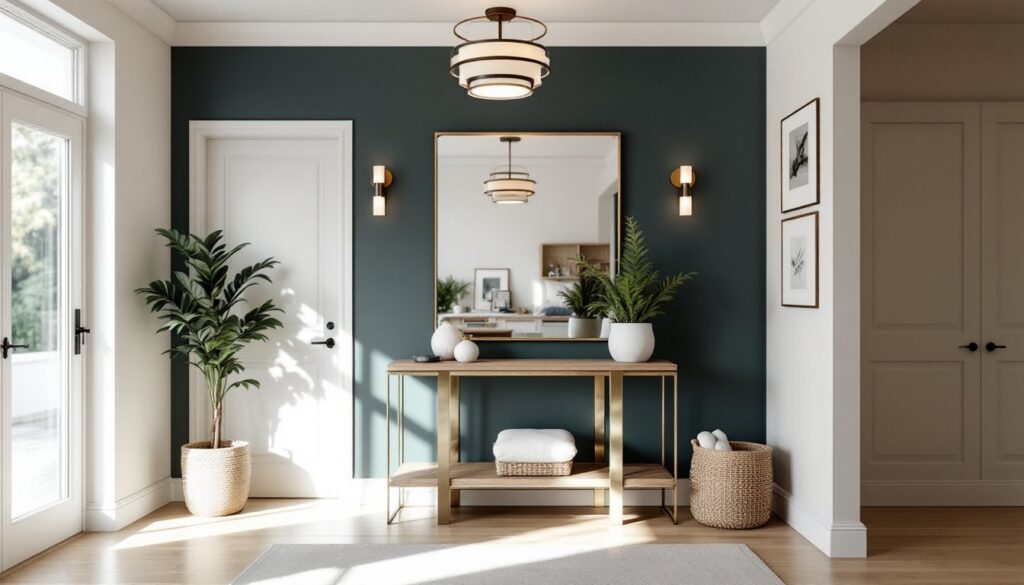
Deep jewel tones like navy, forest green, or charcoal work beautifully in small entryways. They’re cocooning rather than claustrophobic, and they make white trim and fixtures pop. If the entryway opens directly into a living room, consider how the color reads from both sides.
Warm neutrals (warm grays, taupes, warm whites) soften the transition from outside to inside. They pair well with natural wood and brass fixtures, creating a grounded, inviting feel.
Pattern and texture via wallpaper or shiplap adds character without overwhelming. Removable peel-and-stick wallpaper is DIY-friendly and renter-proof: traditional wallpaper, if applied over proper primer and sized surface, lasts longer and feels more permanent. Expect to pay $15–40 per roll (plus labor if hiring). Self-stick wall shiplap (vinyl or composite) runs $80–200 for a 4×8-foot wall section, and installation is straightforward: clean the surface, peel, and adhere.
Accent walls work too. Paint one wall (perhaps the wall opposite the entry door) a bolder shade, and keep the rest soft. This draws focus without commitment.
Prepare surfaces properly before painting: fill holes, sand rough spots, prime if covering dark paint or patched areas. Use a quality paint with good hide (fewer coats needed). Matte finishes hide imperfections: semi-gloss is easier to wipe down if the entryway gets splashed.
Flooring Ideas for High-Traffic Areas
Entryway flooring takes abuse: muddy boots, water spills, and constant foot traffic. It must look good and handle the punishment.
Luxury vinyl plank (LVP) is the modern workhorse. It mimics wood or stone, costs $2–8 per square foot installed, and handles moisture brilliantly. Installation is quick, click-together planks snap over a thin underlayment, and DIY-friendly. Nominal thickness of ¼ inch is standard: go thicker (5mm+) if you want more sound dampening. Make sure your subfloor is flat and level (within ⅛ inch over 10 feet) before laying: otherwise, edges will telegraph uneven spots.
Ceramic or porcelain tile is durable and handsome. Porcelain is denser and better for wet areas. Grout matters: epoxy grout resists moisture and staining better than cement grout, but it’s harder to apply and requires more skill. A professional often makes sense here. 12×24-inch tiles feel more spacious than small mosaics: aim for 3mm–5mm grout joints.
Sealed concrete or polished concrete is minimalist and industrial. It requires a sealer every 1–2 years to resist stains, but the upfront cost is low if you already have a concrete slab. A light polish and clear seal ($1–3 per square foot) beats spending five grand on new flooring.
Natural stone (slate, limestone) is beautiful but porous. It stains easily and needs regular sealing. Sealed correctly, it ages gracefully, but it’s a commitment, not a set-it-and-forget-it choice.
Whatever you choose, transition trim matters. A threshold or transition strip bridges gaps between entryway flooring and adjacent rooms, preventing tripping and allowing for expansion and contraction.
Furniture and Decor Accents
Once structure and finishes are in place, furniture and decor tie the entryway together.
Console tables are classics. A slim table (10–14 inches deep) against a wall holds mail, keys, and a small lamp without blocking the walkway. Pair it with a mirror above (36–48 inches wide) to bounce light and visually expand the space. Mirrors also serve practical purpose, a final check before heading out. Look for modern home decor trends and design inspiration when selecting style and finish.
Area rugs define the space and add warmth. A 3×5-foot rug works in most entryways: runners (2×8 feet) fit narrow corridors. Choose low-pile or flatweave rugs that resist showing dirt and dry quickly after wet boots. Avoid expensive natural fiber rugs (jute, sisal) here, they stain and mat easily.
Plants soften hard surfaces and improve air quality. Tall, narrow plants (like a dracaena or snake plant) fit tight corners. Low light? Pothos or cast iron plant thrive without sunlight. Invest in a good planter with drainage: water pooling damages flooring.
Artwork and accessories should feel intentional, not cluttered. A single large piece or a gallery wall of 3–5 smaller frames looks purposeful. Keep scale in mind: a small 18×24-inch print gets lost above a console in a large foyer: go for 36–48 inches wide if you have wall space. Find interior design ideas and home decor inspiration for curated gallery layout examples.
Lighting accessories like table lamps or pendant lights add function and style. A table lamp on a console provides task light for the entryway proper and soft ambiance. Pendant lights above a bench or hallway create layers of illumination.
Conclusion
A thoughtfully designed entryway isn’t a luxury, it’s the foundation of a functional home. Start with lighting and storage (the non-negotiables), then layer in color, flooring, and decor that reflect your taste. The best entryway ideas balance practicality with personality. You don’t need a big budget: a fresh coat of paint, good hooks, and a console table can work wonders. Take time to plan, prep surfaces properly, and don’t rush the finish details. Your guests will notice, and you’ll appreciate the organized calm every time you step inside.