Table of Contents
ToggleLavender isn’t just a fragrance, it’s a design philosophy. The soft, muted purple-gray tones naturally calm the nervous system and have been linked to better sleep quality by sleep researchers. Whether you’re planning a full bedroom overhaul or refreshing one wall, lavender works in virtually any style, from modern minimalist to farmhouse cozy. This guide walks you through eight practical ways to bring this soothing color into your sleep space, from paint selection to textile choices, with honest tips on budget and execution. You don’t need to hire a designer: most of these projects are well within a homeowner’s DIY skill level.
Key Takeaways
- Lavender bedroom ideas leverage color psychology to create a naturally calming space that promotes better sleep quality without overwhelming the senses.
- Paint selection is the highest-impact investment—grab samples from trusted brands and test them at different times of day, especially in evening lighting when you’ll use your bedroom most.
- Layer textiles strategically: start with a lavender duvet cover, add throw pillows, curtains, and a neutral rug to build depth and comfort without committing to expensive bulk purchases.
- Warm-toned lighting (2700K LED bulbs) is essential to transform how lavender reads on walls—harsh overhead lights flatten the color and eliminate the soothing effect.
- Create a budget-friendly lavender bedroom refresh by prioritizing paint first, staggering textile additions over time, and shopping secondhand for furniture and decor pieces.
- Minimize surface clutter and add living plants or quality natural materials like warm wood tones and metallics to reinforce the calm, retreat-like atmosphere without competing with your lavender palette.
Why Lavender Works in Bedroom Design
Lavender’s appeal isn’t sentimental, it’s rooted in color psychology and lighting behavior. Cool-toned purples recede visually, making rooms feel larger and more restful than warm reds or oranges would. Unlike pure purple, which can feel theatrical or overwhelming, lavender sits in a gentle middle ground: purple enough to feel intentional, but pale enough to stay calm and undemanding on the eyes, especially in low bedroom lighting.
From a practical design standpoint, lavender is also forgiving. It pairs well with whites, grays, warm wood tones, and soft neutrals. This flexibility means you’re not locked into a rigid color scheme, your existing furniture, flooring, and decor likely already complement a lavender palette. The color also photographs well in natural light without looking washed out, which matters if you’re planning to sell or simply want your space to feel inviting during the day.
Beyond aesthetics, some homeowners choose lavender for its subtle link to relaxation. While research doesn’t prove lavender paint cures insomnia, the psychological association can reinforce good sleep habits, especially if you pair the color with other calming elements like soft lighting and minimal clutter.
Paint and Wall Colors: Creating Your Lavender Base
Choosing the Right Shade of Lavender
Lavender comes in dozens of undertones, some lean cool and dusty, others warm and mauve. Before committing to a gallon, grab paint samples from a major brand (Benjamin Moore, Sherwin-Williams, or Behr all offer extensive lavender ranges) and tape them to your walls. Observe them at different times of day, especially in evening lighting, since that’s when you’ll enjoy your bedroom most.
A true lavender sits between RGB values of purple and gray: popular reads include “Behr Crocus Bloom” (a light, airy lavender) or “Benjamin Moore Violet Vibes” (slightly deeper and more saturated). If those feel too bold, try pale lavender or lilac whites, Benjamin Moore’s “Angel’s Wings” or Sherwin-Williams’ “Potentially Purple” offer softer, nearly-neutral options that work as accent walls or full-room bases without dominating the space.
Prep is everything for paint. Fill any wall holes with spackling compound, sand smooth, and prime any existing dark colors or shiny finishes. Use a quality primer, Benjamin Moore Advance or Sherwin-Williams ProClassic work well, especially if you’re painting over orange, red, or dark tones. Two coats of paint over primer typically gives you full coverage on a 12×12 bedroom. Budget 2–3 hours for a single wall, 4–6 for the full room, depending on your experience and room size.
Lavender also works beautifully on trim, ceiling, or as an accent wall. Some homeowners paint the main walls a soft gray or warm white, then use lavender on the accent wall behind the headboard. This approach softens the color impact while still delivering that calming visual anchor. If your bedroom has molding or wainscoting, painting trim a crisp white and walls a pale lavender creates sophisticated depth without extra cost.
Textiles and Soft Furnishings for Comfort
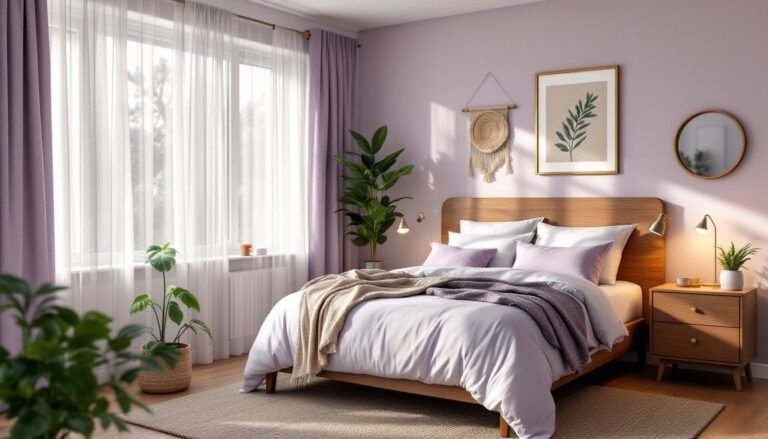
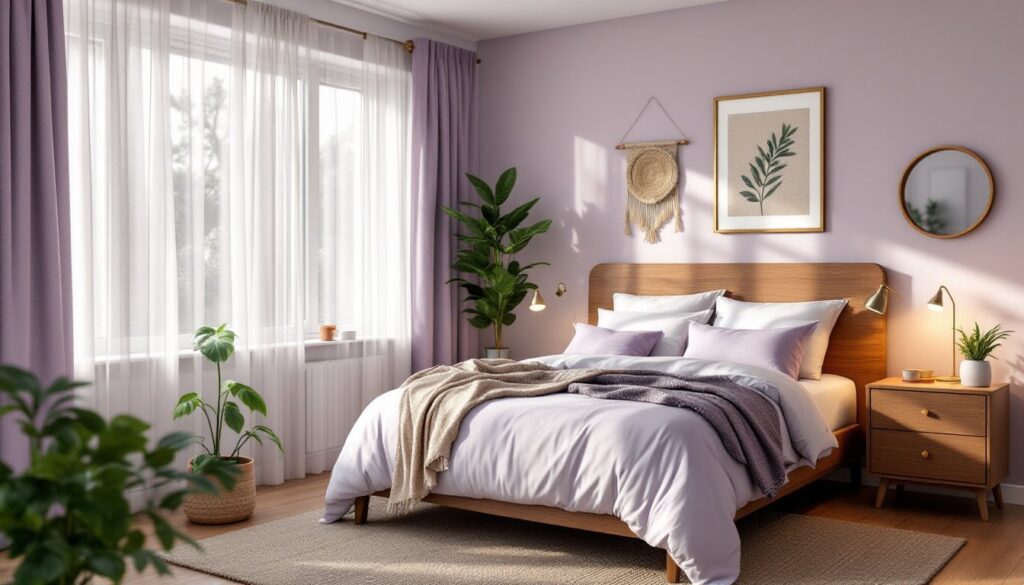
Once the walls are painted, textiles set the comfort level and reinforce the calming theme. Start with bedding: a soft lavender duvet or quilt anchors the palette without requiring you to change your entire set. If lavender duvet covers aren’t readily available at your local retailers, linen brands like Brooklinen and Parachute offer quality options in light purple tones. Mix in neutral sheets (white or gray cotton percale, 300–400 thread count) to keep the bed from feeling monochromatic.
Add texture with throw pillows. A mix of solid lavender, subtle floral, and neutral patterns (stripes, houndstooth) creates visual interest. Linen, velvet, and cotton all work: velvet especially adds a luxe touch without excessive cost. Two or three pillows on a queen bed prevents clutter while adding softness.
Curtains matter more than many realize for bedroom mood. Sheer lavender or pale purple curtains diffuse light softly and complement the walls. If your room gets strong morning sun and you need blackout capability, pair sheer lavender curtains with a neutral blackout liner on the back, or hang blackout panels behind lighter sheers. A basic curtain rod, sheer fabric, and a sewing machine or grommet kit (around $30–50) make this a straightforward weekend project.
Don’t overlook an area rug. A soft gray or taupe rug with subtle texture grounds the space and adds acoustic warmth, practical for reducing footstep noise. If budget is tight, a simple wool or wool-blend rug in a neutral tone ties the room together at roughly $100–200 for an 8×10.
Designers at MyDomaine frequently emphasize that layering textures, linen, cotton, wool, creates a more inviting, personalized bedroom than matching everything in one fabric type.
Lighting and Accents to Enhance the Mood
Lighting is arguably the most overlooked element in bedroom design, and it transforms how lavender reads. Harsh overhead lights flatten the color and kill the calming effect. Instead, layer your lighting: bedside table lamps with warm-toned bulbs (2700K color temperature), wall sconces on either side of the headboard, or a dimmer-controlled overhead fixture for flexibility.
Warm LED bulbs (2700K, 9–15 watts equivalent) create that golden-hour glow that makes lavender walls appear deeper and more luxurious. Install bulbs before finalizing your paint choice, if possible: paint color shifts dramatically under different light temperatures.
For accents, bring in metallics and natural materials that complement lavender without competing. Brass or brushed gold hardware on nightstands feels warm and intentional. Wooden nightstands in warm oak or walnut ground the space and contrast beautifully with cool lavender walls. A simple wooden headboard or upholstered headboard in a neutral linen reinforces the calm, retreat-like atmosphere.
Small decor pieces, a lavender-tinted vase, white ceramic lamp, woven wall hanging, or framed botanical print, extend the theme without overwhelming the room. Keep surfaces clean and minimal: a cluttered nightstand undermines all the soothing you’ve worked to build.
Plant life adds organic texture and quietly reinforces the botanical connection to lavender itself. A pothos or snake plant in a terracotta or ceramic pot on a window sill or dresser requires minimal care and adds living color. Avoid synthetic floral arrangements: real or high-quality dried botanicals feel more intentional and age-appropriate.
Budget-Friendly Tips for a Lavender Refresh
You don’t need to spend thousands to create a lavender bedroom retreat. Here’s how to prioritize:
Start with paint. A gallon of mid-range interior latex paint (Behr, Sherwin-Williams, or store brands like Valspar) runs $25–40. With primer, that’s $50–70 to transform your entire room visually. DIY application saves $300–600 in labor if you’re willing to invest a Saturday afternoon.
Layer in one key textile at a time. Rather than buying new bedding, curtains, and a rug simultaneously, refresh your duvet cover (often $30–60) first. Add pillows or a rug a few months later when budget allows. This staggered approach lets you refine your color preferences without overcommitting.
Shop secondhand for furniture. Facebook Marketplace, Craigslist, and local thrift stores often have solid wood nightstands, dressers, or mirrors in warm tones that work beautifully with lavender. A $40 thrifted wooden dresser refinished with simple hardware costs a fraction of new.
DIY curtains or pillow covers. If you sew or are willing to learn, unlined curtains and simple envelope pillow covers take a couple of hours and cost $1–2 per linear yard of fabric. Joann Fabrics and local fabric shops offer lavender, white, and neutral linen and cotton at reasonable prices. Home Bunch showcases many budget-conscious DIY approaches to custom textiles that look high-end.
Leverage what you have. Rearrange existing furniture, move a lamp from another room, or repaint an old mirror frame with metallic spray paint. Intentional, personal touches often matter more than new purchases.
Set a budget ceiling ($200–500 for most refreshes) and tackle the highest-impact projects first: paint, then one or two textile pieces. Everything else can wait or happen gradually.
Conclusion
A lavender bedroom doesn’t require a designer, a massive budget, or perfect Pinterest aesthetics. The color itself does most of the emotional work: your job is to choose a shade that speaks to you, prep surfaces properly, and layer in simple, quality textiles and lighting that reinforce calm. Palettes ranging from moody purple designs to softer lilacs all work within the lavender spectrum, what matters is that your space reflects your personal retreat. Start small, observe how light and color interact in your specific room, and build from there. Most of these projects, paint, curtains, bedding, can be reversed or adjusted, so don’t overthink the decision. Your bedroom is where you spend roughly a third of your life: investing a few weekend hours and modest funds into making it a calm, personal sanctuary is one of the smartest home improvements you can make.