Table of Contents
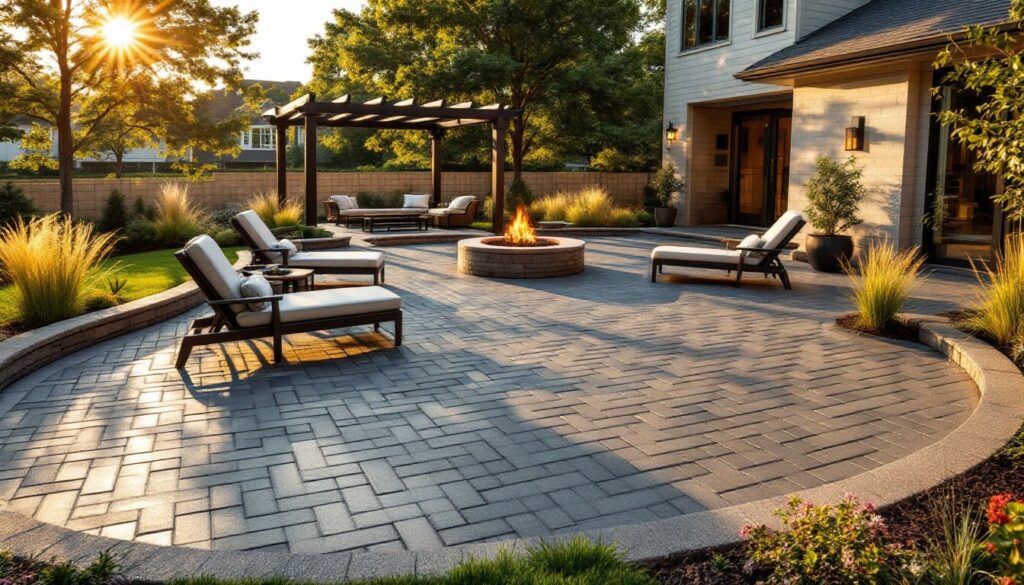
ToggleA large paver patio isn’t just a backyard feature, it’s an investment in livable outdoor space. Whether you’re hosting summer gatherings or creating a peaceful retreat, the design you choose shapes how your family and friends experience that area. The good news? Paver patios offer flexibility, durability, and visual impact that other materials struggle to match. From clean geometric patterns to flowing curves, there are dozens of ways to approach a large paver patio. This guide walks through the most popular designs trending in 2026, plus practical considerations that separate a weekend project from a years-long regret.
Key Takeaways
- Large paver patio ideas range from modern geometric patterns and classic herringbone layouts to curved edges and mixed materials, each offering distinct visual and structural benefits.
- Proper base preparation with 4–6 inches of compacted gravel and landscape fabric is essential—skipping this step leads to shifting, cracking, and drainage problems within 2–3 years.
- Geometric patterns require precision and straight lines (use chalk, string, or laser levels), while herringbone and basketweave patterns offer superior load distribution but demand more labor-intensive cutting and sequencing.
- Mixed material combinations like natural stone framed with concrete pavers and permeable pavers filled with gravel add visual depth, improve drainage, and reduce environmental runoff.
- Installation costs range from $3 to $20+ per square foot depending on material quality and region; phasing a large patio installation in stages (200–300 square feet at a time) prevents costly mistakes and allows drainage assessment.
- Choose paver materials suited to your climate—permeable options work better in freeze-thaw zones, while textured pavers resist slipping in high-traffic areas.
Modern Geometric Patterns For Contemporary Appeal
Geometric patterns suit contemporary homes where clean lines and minimalism reign. Think checkerboard layouts, diagonal grids, or mixed-size rectangles arranged in structured repeats. These designs work especially well on large patios because they’re visually bold without feeling chaotic.
A 2:1 running bond pattern (pavers laid in offset rows like brickwork) is one of the simplest geometric options and hides imperfections well. Alternatively, a pinwheel layout uses identical square or rectangular pavers rotated 45 degrees around a central point, creating dynamic movement even though nothing is actually curved. For maximum visual interest, consider alternating paver colors within the pattern, charcoal and light gray, or warm and cool tones.
Geometric patterns demand precision during layout. Mark chalk lines or use string to establish your grid before you lay a single paver. On a large patio, small measurement errors compound quickly. Use a laser level if your patio isn’t perfectly flat: uneven ground amplifies the visual impact of straight-line patterns.
Classic Herringbone And Basketweave Layouts
Herringbone and basketweave are the reliable workhorses of patio design. Both use rectangular pavers in interlocking patterns that have worked for centuries. Herringbone arranges pavers at 45-degree angles in a V-shaped weave, while basketweave sets two pavers horizontally, then two vertically, repeating that pattern across the surface.
These layouts offer superior structural stability because interlocking pavers distribute load more evenly than simple running bonds. That’s especially important on large patios where foot traffic concentrates in certain areas. The visual rhythm also hides minor variations in paver color or shade, making basketweave and herringbone forgiving choices if you’re mixing batches from different production runs.
The tradeoff? They’re more labor-intensive to lay than geometric patterns. You’ll have more cuts along edges, and you can’t just space them in a grid, the weaving pattern requires careful sequencing. Rent a wet saw for cleaner cuts if you don’t own one: hand-cutting dozens of pavers wastes time and produces jagged edges that look unfinished.
Mixed Material Combinations And Texture Play
Elevate your patio by combining pavers with complementary materials. Mixing natural stone pavers (flagstone, limestone, bluestone) with manufactured concrete pavers creates warmth and visual depth. You might frame a concrete paver field with a natural stone border, or alternate bands of each material to break up the visual footprint.
Permeable pavers (pavers with gaps or open-joint designs) can be filled with gravel or sand, offering both aesthetic interest and better drainage. This matters more than you’d think, standing water on a large patio creates algae, ice hazards, and accelerates pavement failure. According to research on sustainable outdoor design, permeable options reduce runoff while maintaining durability.
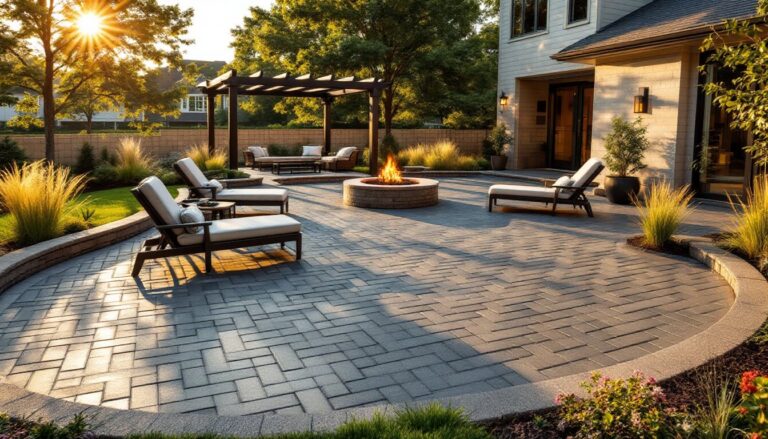
Another option: combine pavers with hardscape elements like a fire pit surround in matching stone, or integrate raised garden beds at patio edges using the same material. Texture contrast, smooth concrete pavers with rough-faced natural stone, catches light differently and makes large surfaces feel less monotonous. Just ensure all materials are rated for outdoor use and similar load-bearing capacity.
Curved Edges And Flowing Designs
If your home or landscaping has curved lines, straight-edged patios look disconnected. Curved patio edges soften the transition between hardscape and lawn or garden. This works beautifully with organic garden shapes, especially if you’re working around existing trees or slopes.
Curved edges require more cuts and fitting than straight ones, so be realistic about labor. You’ll need a wet saw and patience to shape pavers to follow your curve line. Mark the curve beforehand using a rope or garden hose laid out on the ground, that becomes your template. Lay straight pavers as long as possible, then transition with wedge-shaped cuts around the curve.
Beyond edge curves, you can create flowing patterns within the patio itself. Radiating herringbone (herringbone that fans outward from a center point) or concentric rings of alternating paver colors produce mesmerizing movement. These intricate designs suit moderately large patios better than massive ones, complexity can overwhelm if the patio exceeds 600–800 square feet without breaking points like planters or seating areas.
Practical Considerations For Large Patio Success
Budget And Material Selection Tips
Large patios eat through materials and labor quickly. A paver costs $5 to $15 per square foot installed on average, but ranges from $3 (basic concrete) to $20+ (imported natural stone) depending on region, quality, and current supply. A 500-square-foot patio at the midpoint runs $2,500–$4,000 just in materials: labor and site prep add significantly.
Before buying, budget for base preparation: most patio installs need 4–6 inches of compacted gravel or sand, plus landscape fabric to prevent weeds. Skip proper base work and your patio shifts, cracks, and fails within 2–3 years. Your water bill will also suffer because improper drainage leads to settling.
Choose materials that suit your climate. In freeze-thaw zones, permeable pavers with sand joints expand and contract less destructively than solid-joint designs. In high-traffic areas, textured pavers resist slipping when wet. Ask your supplier which paver types perform best locally, they’ve seen which failures repeat.
For a large patio, consider phasing installation. Build 200–300 square feet one season, let it settle and reveal drainage issues, then expand. It costs slightly more in labor but prevents catastrophic mistakes on a massive scale. Most homeowners also prefer tackling a large project in stages rather than taking weeks off work.
Conclusion
Your large paver patio design should balance aesthetics with durability and your skill level. Geometric and herringbone patterns offer visual sophistication without requiring advanced techniques. Curved edges and mixed materials elevate a basic patio into a designer feature, but demand precision and patience. Regardless of style, proper base preparation and appropriate material selection for your climate determine whether your investment lasts decades or becomes a cautionary tale. Start with a clear vision, invest in site prep, and don’t rush the installation, your future self will thank you.