Table of Contents
ToggleA shared bedroom doesn’t have to feel cramped or chaotic. With thoughtful planning, you can create a space where both kids have their own identity while sharing square footage efficiently. The key is dividing the room functionally without adding walls, maximizing storage, and letting each child’s personality shine through. Whether you’re working with a 10-by-12 layout or something tighter, these seven design strategies transform kids shared bedroom ideas into a practical, livable space that actually works for daily life, not just Instagram.
Key Takeaways
- Create separate zones without walls using area rugs, furniture placement, and strategic lighting to give each child their own territory and reduce the cramped feeling in kids shared bedroom ideas.
- Vertical storage solutions like floating shelves, under-bed bins, and pegboards maximize square footage and keep clutter off floors in a shared bedroom layout.
- Choose a neutral base wall color and let each child express personality through accent pieces like bedding, pillows, and wall decals for a cohesive design that adapts as they grow.
- Select the right bed arrangement—bunk beds, perpendicular twins, or loft beds—based on ceiling height, floor space, and your children’s sleeping preferences and autonomy needs.
- Assign each child a personalized display space using bulletin boards, floating shelves, or clipboards to showcase their interests and make the shared space feel distinctly theirs.
- Implement layered lighting with overhead fixtures, task lamps for desk areas, and accent lighting to improve functionality and add personality without overwhelming the room.
Create Separate Zones Without Walls
The smartest move in a shared bedroom is establishing visual and functional zones so each kid feels they have their own territory. You don’t need drywall or a permanent divider, think of it like creating invisible boundaries.
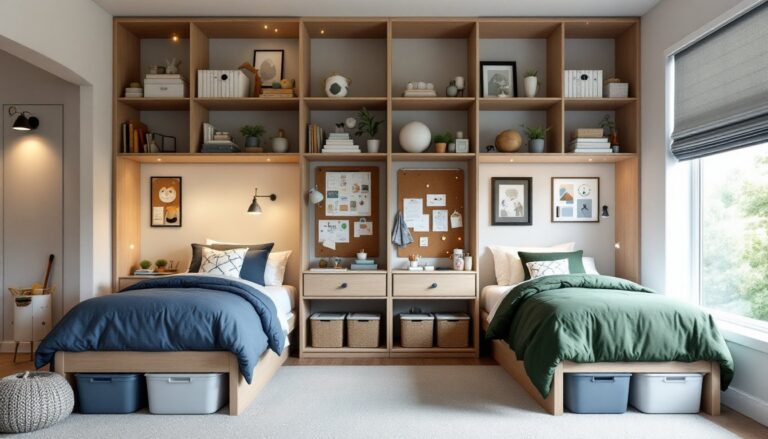
Use area rugs, strategic furniture placement, and lighting to define each zone. Position beds perpendicular to each other or along different walls rather than side by side. This creates a psychological separation and gives each child sightlines to their own space without constant eye contact. If the room layout allows, angle a dresser, bookcase, or low shelving unit to create a subtle room divider. It breaks up the visual monotony and gives the illusion of more personal space.
Color blocking also works here. Paint one accent wall one color for one kid’s zone and another wall a different shade for the other’s. Alternatively, use removable wall decals or hanging fabric panels to soften the division without permanent changes. You’re not building walls: you’re signaling “this corner is yours, that corner is theirs.”
Tall furniture, a bookcase, armoire, or shelving unit, naturally compartmentalizes the room better than short pieces. It doesn’t block light or sight lines as much as a physical partition would, but it still signals separation. Aim for pieces around 48 to 60 inches tall. Make sure any tall furniture is anchored to wall studs with L-brackets or wall anchors rated for the furniture’s weight to prevent tipping hazards with kids around.
Smart Storage Solutions for Shared Spaces
Storage is the heartbeat of a functional kids’ shared bedroom. Without it, chaos wins. Every square inch counts, so think vertical, multi-functional, and accessible.
Use Vertical Storage and Built-In Organizers
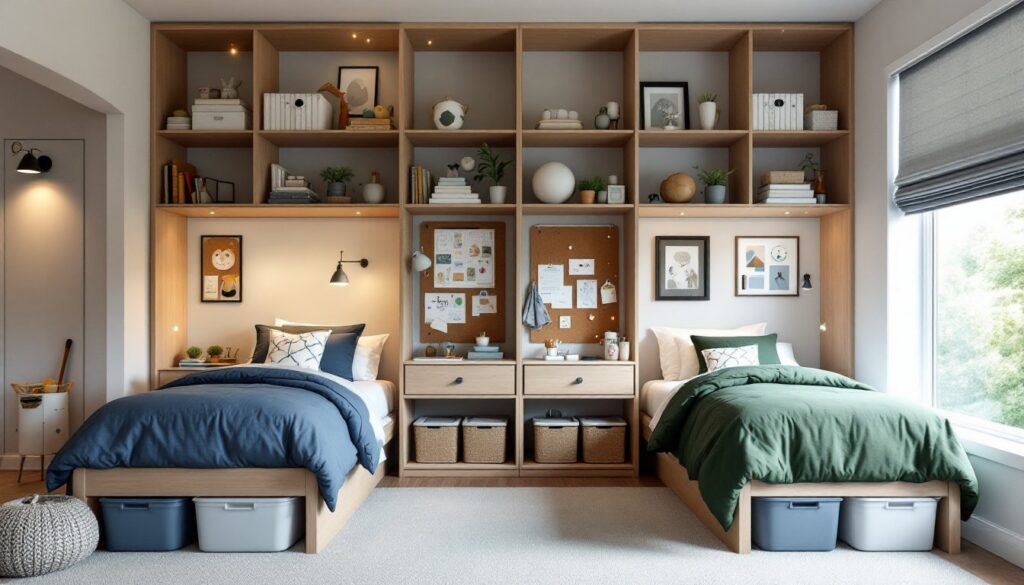
Wall space is free real estate in a tight room. Install floating shelves along one or both walls, aim for shelves 24 to 36 inches long and spaced 12 to 16 inches apart vertically depending on what goes on them. Toys, books, and bins stack upward instead of sprawling across the floor. Anchor shelves into wall studs with heavy-duty brackets rated for the load (typically 25 to 50 pounds per shelf for kids’ items).
Under-bed storage is non-negotiable. Invest in rolling plastic bins or flat storage boxes that slide under standard bed frames (typically 6 to 10 inches of clearance under most beds). Label each bin clearly so kids know what lives where, seasonal clothes, holiday decorations, sports gear, art supplies. This keeps clutter off surfaces and off the floor.
Consider installing a pegboard wall above a desk or craft station. It’s budget-friendly, customizable with hooks and bins, and lets kids see what they have without opening cabinets. You can find pegboards at any home center and install them with wall anchors rated for your wall type (drywall, plaster, or solid masonry).
A shared closet often means chaos. Use cascading hangers (the kind that hook onto each other) to double hanging capacity. Add a shelf divider or hanging organizer inside the closet to separate each kid’s clothes. Consider a tension rod halfway down the closet to create a second hanging rail for shorter garments or school bags.
Pick a Cohesive Color Scheme That Works for Both Kids
Color choices make or break a shared bedroom’s vibe. Your instinct might be to paint half the room one color and half another, but that often looks chaotic and dates fast.
Instead, choose a neutral base color, soft gray, warm white, or light beige, for the walls. This calms the visual noise and gives you flexibility. Then introduce each kid’s personality through accent pieces: bedding, throw pillows, wall decals, artwork, and rug colors. Each child picks their own shade (one picks ocean blue, the other picks forest green), and these colors flow throughout their zone without needing separate paint jobs.
This approach also means future design changes are cheap and easy. Swap out pillows and decals as kids age and tastes shift. You’re not repainting walls every two years.
If each kid insists on a different wall color, keep them coordinating. Pair a soft sage with a soft blush, or a pale blue with pale yellow, colors that share the same undertones and saturation. This keeps the room feeling intentional and cohesive, not fractured.
Use primer before paint on walls, especially if covering existing colors. One coat of quality primer prevents bleed-through and saves you from needing three coats of finish paint. Expect standard wall paint to cover roughly 350 to 400 square feet per gallon at one coat, though this varies by surface texture and paint quality.
Dual Beds and Sleeping Arrangements
The bed layout is everything in a shared bedroom. Standard options are twin over twin bunk beds, two side-by-side twin beds, an L-shaped loft setup, or trundle beds.
Twin bunk beds save the most floor space, they stack vertically and leave the floor open for play, assignments, or additional furniture. Standard bunk beds are 39 inches wide, 75 inches long, and 65 inches tall (interior height varies by model). Measure your ceiling height: you’ll want at least 12 inches of clearance above the top bunk for safe head movement. Ensure bunks are securely bolted to the wall at the headboard and footboard with proper hardware. Inspect weight limits and guardrails annually.
Two twin beds placed perpendicular or along opposite walls gives each child their own space and autonomy, no climbing, no shared sleeping. This works better for older kids or those who sleep lightly and are bothered by movement above them.
Loft beds with a desk or storage underneath maximize utility. One kid sleeps on the loft while the other uses the ground-level workspace or play area. Most lofts are 39 inches wide and 75 inches long, with 48 to 60 inches of underbed clearance, giving genuine usable space below.
Trundle beds (a platform bed with a rolling second bed underneath) work for smaller rooms. Standard trundles are 39 inches wide and 75 inches long: the hidden bed rolls out as needed. This is practical for sleepovers but less ideal for permanent shared sleeping since rolling in and out daily wears on the casters.
Whatever you choose, invest in quality mattresses suited to each child’s firmness preference and sleep style. A good mattress isn’t a splurge: it’s the foundation of sleep quality, which affects behavior and focus.
Add Personalized Decor and Display Space
Each kid needs a place to showcase their interests and personality. This isn’t just feel-good stuff, it’s psychologically important. Shared spaces feel less cramped when you can clearly see “that’s mine.”
Designate a bulletin board, cork panel, or magnetic board above each bed or desk. Kids can rotate artwork, school projects, photos, and interests without cluttering walls. Standard cork boards are 24 by 36 inches and mount easily with standard wall hangers rated for 10 to 20 pounds.
Hanging fabric frames or clipboards on walls are affordable and renter-friendly. You can find these at craft stores or online, they’re lightweight and attach with small nails or command strips (which are damage-free and excellent for dorm-style decor).
A narrow floating shelf (18 to 24 inches long) above each bed or desk becomes a personal display zone for trophies, favorite books, collectibles, or photos. Keep these shelves intentional: they’re not dumping grounds. Rotate items seasonally so the display stays fresh and relevant to what your kids care about now.
Consider a budget home makeovers approach using removable elements. Peel-and-stick wallpaper, fabric wall hangings, and stick-on decals let each kid customize their zone without permanent changes or landlord drama.
Lighting and Functional Decor Elements
Lighting is criminally overlooked in kids’ shared bedrooms. You need layered light: overhead light for general visibility, task lighting for assignments or reading, and accent lighting for ambiance and personality.
Overhead lighting: A flush-mount 40 to 60-watt LED equivalent ceiling fixture covers general illumination without the heat or power drain of older bulbs. Make sure it’s centered or slightly offset if the room has two distinct zones.
Task lighting: Desk lamps or swing-arm wall lamps above assignments areas are essential. Look for adjustable LED desk lamps (800 to 1000 lumens) that reduce glare and won’t strain eyes during assignments. Clamp-mount swing arms are great for saving desk space. Ensure cords are routed safely away from play areas.
Accent lighting: String lights, wall sconces, or LED strip lights add personality and make each zone feel intentional. Soft warm white LEDs (2700K color temperature) feel cozy: cooler tones (3000-4000K) feel energizing. Keep these away from fabric or flammable materials and inspect regularly for damage.
Wall sconces on either side of beds or above desks provide focused light and look polished. Most sconces need a single dedicated outlet or hardwiring into the wall circuit. If you’re not comfortable running new circuits, opt for plug-in alternatives or battery-operated options.
Incorporate blackout curtains or roller shades if the room gets morning sun that wakes early risers. Blackout fabric blocks light and muffles outside noise, crucial for kids who need different sleep schedules. Look for blinds with cordless or cord-safety mechanisms (no dangling cords around young kids).
Add a small rug in each zone to absorb sound, define space, and soften the room underfoot. Kids’ rugs are durable and washable, look for low-pile options that don’t hide dust. Pair rugs with DIY furniture plans and projects so everything feels intentional.