Table of Contents
ToggleA fireplace does more than provide warmth, it anchors a room and becomes a focal point for gathering. Whether you’re renovating an older home or updating a newer one, indoor fireplace ideas range from traditional wood-burning builds to sleek electric and ethanol units that require minimal installation. The good news? You don’t need a massive budget or structural overhaul to add one. Modern fireplaces come in styles that fit corner niches, wall-mounted spaces, and nearly any aesthetic, from minimalist to rustic. This guide walks through seven proven indoor fireplace designs, placement strategies, and material choices to help you pick the right fit for your home and skill level.
Key Takeaways
- Indoor fireplace ideas range from traditional wood-burning builds to modern electric and ethanol units, with options that fit any budget, space, and skill level.
- Minimalist fireplaces use clean lines and neutral finishes like concrete or slate hearths to let flames be the focal point, with electric models starting at $400–$1,200 for renters.
- Wood-burning fireplaces are a structural commitment costing $3,000–$10,000+ and require annual chimney inspections, permits, and professional installation by a licensed mason.
- Electric fireplaces are the easiest DIY option, requiring only a standard outlet with no venting or permits, though they produce about 85% of the heat of gas or wood fireplaces.
- Proper placement (corner, wall-mounted, or floor-mounted) and fire-rated materials for hearths are critical for safety, with specific clearance requirements varying by fireplace type.
- Material choices like slate, brick, tile, and metal surrounds set the design tone, with costs ranging from $100–$3,000+ depending on whether you choose budget-friendly painted drywall or premium marble finishes.
Modern Minimalist Fireplaces
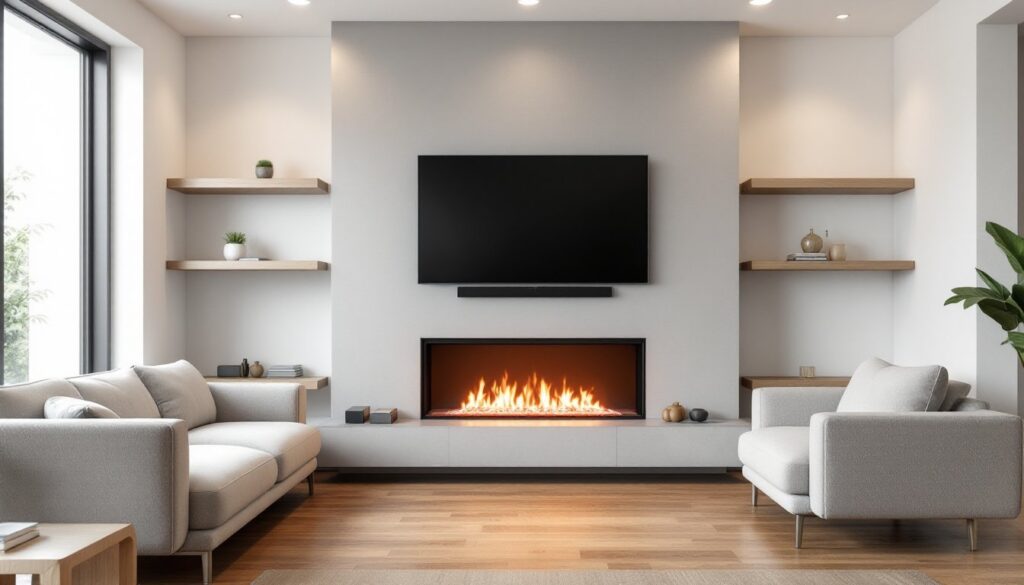
A minimalist fireplace strips away ornament and focuses on clean lines, simple materials, and functional design. Think a sleek metal surround, concrete hearth, or frameless glass enclosure that lets the flames be the star. The appeal is obvious: no fussy trim, no decorative mantels laden with knickknacks, just fire and form.
The easiest way to achieve this look is with a direct-vent gas insert or a custom metal box fireplace surround in matte black or brushed steel. You’ll want a hearth of poured concrete, polished concrete, or slate, aim for a smooth finish that contrasts with the wall. Keep the wall behind the fireplace a neutral tone (white, gray, or dark charcoal). A thin floating shelf above can work, but resist the urge to crowd it.
For renters or those who want zero installation, a freestanding electric fireplace with a metal enclosure gives the same minimalist vibe without venting or wiring work. Some units simulate a firebox with adjustable flame colors and brightness, making it a proper design element rather than an appliance. Expect to spend $400–$1,200 depending on size and features.
One word of caution: minimalist designs demand perfect surface prep and finish work. Any drywall imperfections, uneven paint, or crooked trim will stand out. Take time to sand, prime, and apply two coats of quality paint. The payoff is a space that feels intentional and modern.
Traditional Wood-Burning Fireplaces
A wood-burning fireplace is the real deal, nothing replaces the sight and smell of burning logs. But, building or installing one is a structural commitment that often requires a chimney, foundation support, and building permits. Be honest about this upfront: a masonry fireplace and chimney can cost $3,000–$10,000+ and typically demands a licensed mason.
If you’re starting from scratch, hire a mason or chimney specialist to assess your home’s structure and local codes. They’ll determine if you can use an existing chimney or need to build one, where to place the firebox (the interior opening), and what diameter flue you need. Most residential fireplaces use a 36–42-inch-wide opening and require a hearth extending at least 16 inches in front and 8 inches on each side per IRC standards.
For those with an existing fireplace that needs updating, you can install a wood-burning insert, a metal box that fits inside your current fireplace opening and improves draft and heat output. Inserts run $800–$2,500 and are far cheaper than a full rebuild. They do require professional installation and a chimney inspection.
Maintenance is key. Have your chimney swept and inspected annually by a certified chimney sweep or fireplace professional. Creosote buildup is a real fire hazard. You’ll also need seasoned firewood (not green wood), proper ash removal, and a spark screen or doors to contain embers.
Contemporary Electric and Ethanol Fireplace Solutions
Electric Fireplaces for Renters and Flexibility
Electric fireplaces are the DIYer’s best friend. They plug into a standard outlet, require no venting, no permits, and no structural changes. Modern electric units produce realistic flame effects with LED lighting and can include adjustable heat output from 750 to 1,500 watts, enough to warm a room or just run as ambiance with heat off.
Standard electric fireplaces sit in an entertainment unit or built-in cabinet, while wall-mounted electric fireplaces hang like a flat-screen TV and require only a power outlet nearby. Installation is literally hanging the unit and plugging it in. Costs range from $200–$1,000 depending on size and flame realism. Brands like Real Flame, Touchstone, and ClassicFlame offer solid mid-range options with flame adjustment and remote controls.
One limitation: electric fireplaces produce about 85% of the heat output of a wood or gas fireplace of the same size. If you’re counting on it as primary heat in a cold climate, you’ll be disappointed. Use it as a supplemental heater or ambiance piece. Look for units with a 10-hour auto-shutoff timer for safety and lower energy bills.
Ethanol Fireplaces for Modern Aesthetics
Ethanol fireplaces burn bioethanol fuel and create a real flame with no smoke, ash, or venting required. They’re the modern minimalist’s dream: a sleek metal box mounted on a wall or inserted into a niche, producing a clean blue or orange flame. The aesthetic is strikingly contemporary, and they work in rentals, apartments, and homes without chimneys.
A tabletop ethanol fireplace costs $150–$500 and burns for 4–6 hours per liter of fuel. Wall-mounted units run $500–$2,000 and are more permanent but still installation-light, mostly hanging and securing to studs. Fuel costs roughly $4–$8 per liter, or about $15–$30 per week if you run it regularly.
Safety matters here. Ethanol burners must sit on a level, fire-resistant surface, away from flammable materials, curtains, and children. Ventilation isn’t required by code, but a window crack open or a carbon monoxide detector is sensible. Never refill while the unit is hot. Check manufacturer guidelines, many ethanol fireplaces come with strict spacing requirements from walls and furniture.
Corner and Wall-Mounted Fireplace Placements
Placement dictates both function and impact. A corner fireplace tucks into an underused area and works beautifully with L-shaped seating arrangements. It’s especially smart in smaller rooms where a center wall mount might block sightlines or dominate the space. Corner fireplaces work best with a simple metal surround, concrete hearth, or built-in cabinet that wraps the corner.
For wall-mounted designs, choose a stud-bearing wall (confirm with a stud finder). If you’re mounting a wall-mounted electric fireplace, you’ll need to run power to that location, either from an existing outlet (if within 6 feet) or by installing a new outlet with proper wiring. Don’t run power cords across the floor as a long-term solution: hire a licensed electrician if running new wire is needed. The cost for a single outlet is typically $150–$300.
Heating and safety: place fireplaces away from sofas, bookshelves, and curtains. Electric units need 3–6 inches of clearance on each side: ethanol burners require 12 inches or more per manufacturer specs. Check your fireplace’s documentation for exact spacing. Avoid placing them under cabinetry or in alcoves where heat could accumulate.
A floor-mounted gas or wood fireplace needs a hearth that extends 16 inches in front and 8 inches on each side. Use non-combustible materials like slate, tile, concrete, or brick. If installing on carpet or wood flooring, you’ll need a fire-rated underlayment or concrete pad, don’t skip this. Building codes are strict about hearth protection, and an inspector will catch shortcuts. These placements showcase fireplace designs that maximize impact and functionality in various room layouts.
Fireplace Materials and Finishes to Enhance Your Home
Material choice sets the entire tone. A slate or concrete hearth reads modern and pairs well with minimalist surrounds. Brick, stone, or tile feels traditional and works with rustic, farmhouse, or transitional styles. Match your surround material to your home’s existing finishes, if your kitchen has subway tile, consider subway tile around the fireplace too.
For the surround itself, consider these options:
- Metal (steel, iron): Modern, durable, minimal maintenance. Costs $200–$800 for a simple surround.
- Shiplap or painted drywall: Budget-friendly and versatile. Pair with a simple metal trim for definition. Plan on $100–$300 in materials plus paint.
- Tile or brick veneer: High-impact, can mimic masonry without full rebuild. Expect $400–$1,500 for materials and labor.
- Marble or limestone: Premium look, requires sealing and maintenance. Budget $1,000–$3,000+.
Paint and finish details matter. A dark accent wall behind the fireplace makes flames pop. Use a low-VOC primer and two coats of matte or satin paint, high-gloss shows dust. If adding a mantel shelf, secure it to studs with heavy-duty brackets rated for 100+ pounds: a loaded mantel will sag on hollow drywall anchors.
Hearth materials must be fire-rated. Standard drywall and wood won’t pass inspection. Use non-combustible materials: tile, stone, concrete, or commercially available hearth boards. Check your local IRC guidelines, requirements vary. A ½-inch concrete backer board costs $20–$50 per sheet and provides a solid base for tile or stone finish. When in doubt, consult your inspector or a fireplace professional. Interior design platforms offer visual inspiration for material and color combinations that work across different home styles.