Table of Contents
ToggleYour entryway is the first impression guests have of your home, and the last thing you see before heading out the door. Yet many homeowners neglect this crucial space, treating it as a catch-all closet instead of a welcoming threshold. The good news: IKEA offers a treasure trove of affordable, modular solutions that let you build a functional, stylish entryway without very costly. Whether you’re working with a sprawling foyer or a tight hallway, these seven IKEA entryway ideas will help you craft a space that’s both practical and visually appealing. From clever storage systems to lighting tricks, we’ll walk you through real-world strategies that work in 2026’s design landscape.
Key Takeaways
- IKEA entryway ideas like modular wall systems (BESTÅ and KALLAX) and benches provide affordable, functional storage solutions that transform entryways from catch-all closets into welcoming spaces.
- Proper lighting and strategically placed mirrors double the perceived brightness in dark entryways and make small spaces feel larger, with fixtures like UPPLYST sconces and LINDBYN mirrors maximizing visual impact.
- A functional entryway requires an anchor piece (wall system or bench), adequate clearance for movement (at least 18 inches in front of seating), and proper wall-mounting hardware to ensure safety and stability.
- Organization systems using IKEA baskets, pegboards, and labeled storage assign homes for everyday items like keys and mail, preventing clutter and creating a cohesive entryway design.
- Layering textures, colors, and decor accessories—such as plants, mirrors with decorative frames, and woven storage—adds warmth and personality without overwhelming a small entryway space.
- Matching your IKEA entryway finishes (white, gray, walnut, or black-brown) to your home’s aesthetic and adding a fresh coat of wall paint creates a cohesive, inviting threshold between your home and the world.
Create a Functional Storage Solution With IKEA Wall Systems
The backbone of any functional entryway is storage, and IKEA’s modular wall systems make this painless. The BESTÅ and KALLAX shelving units are workhorses here. They’re lightweight, easy to install with basic tools (a stud finder, level, and drill are all you need), and accept add-ons like doors, baskets, and drawers.
For a deep entryway, a floor-to-ceiling BESTÅ configuration gives you dedicated zones: cubbies for shoes at ankle height, hooks for bags in the middle, and display shelves up top. If you’re working with limited wall space, stack two KALLAX units horizontally and add a bench on top, instant shoe storage plus seating.
Pro tip: Always locate studs before mounting anything heavier than a plant. Use toggle bolts if studs don’t align with your shelf placement, and spread the load across multiple fasteners. IKEA’s assembly instructions are clear, but measure twice and check your level frequently. The wall anchors included in most kits work for light loads, but wall systems with deep shelves and heavy contents need stud mounting.
Add Lighting and Visual Impact With IKEA Fixtures and Mirrors
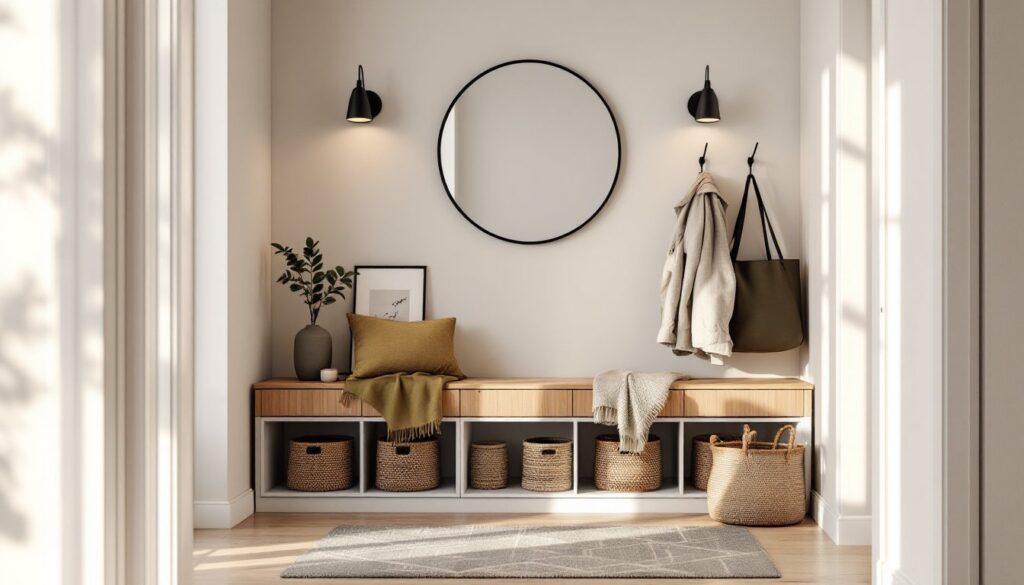
Dark entryways feel cramped and uninviting. IKEA’s lighting selection, from the budget SPÖKA pendant to the sleek HEMNES wall lamp, transforms mood instantly. If your entryway lacks overhead light, a pair of UPPLYST wall sconces flanking a mirror creates symmetry and doubles the perceived brightness through reflection.
Mirrors are non-negotiable here. A large LINDBYN or HOVET mirror not only checks your appearance before you leave: it bounces light around and makes tight spaces feel larger. Hang it at eye level (about 57–60 inches from the floor to center) directly across from your main light source for maximum effect.
Electrically, check local codes: some jurisdictions require any light fixture within 3 feet of a doorway or in a wet-adjacent space to be on a GFCI circuit. If you’re not comfortable running new wiring, plug-in ÅRSSNYD or JÄRPÖN accent lamps work just fine and add flexibility. Keep the wattage reasonable, 60W equivalent LED bulbs provide plenty of light without creating a harsh glare in a small space.
Define Your Space With IKEA Benches and Seating
An entryway bench serves triple duty: seating for pulling on shoes, a visual anchor that defines the space, and additional storage below. The PINNIG bench with shoe storage is IKEA’s hero piece for this, it’s affordable, comes in multiple finishes, and the built-in compartment keeps footwear out of sight. For smaller entryways, the MACKAPÄR bench is more compact while still offering under-seat storage.
If you already have a wall unit, a simple upholstered bench like the MÖRBYLÅNGA or PINNIG adds warmth and a place to sit while you tie your boots. Pair it with a cushion (IKEA offers several affordable options) for comfort and a pop of color or pattern.
When measuring for a bench, ensure at least 18 inches of clearance in front of it for actual seating movement. In tight hallways, a wall-mounted fold-down bench isn’t always IKEA’s strength, a bench with legs that float slightly off the floor creates visual lightness and makes cleaning easier.
Use Color and Style to Match Your Home’s Aesthetic
IKEA’s finishes range from stark white to warm walnut, cool gray, and rich black-brown. The key is matching your entryway to your adjacent living spaces, a stark white BESTÅ system looks jarring if your living room is warm and earthy.
For a cohesive look, pick one dominant finish and one accent color. If your home leans Scandinavian, stick with white, light gray, and natural wood: pair it with soft green or muted blue accessories. For a transitional or eclectic home, EKET in dark gray or the honey-toned IVAR system offers flexibility and warmth. According to recent interior design insights, neutral bases with strategic pops of color create visual interest without overwhelming a small space.
Don’t underestimate paint. A fresh coat of wall color, whether soft sage, warm gray, or even a deep navy accent wall, costs under $50 and transforms the entire mood. Pair it with IKEA’s natural wood tones for a grounded, inviting feel.
Incorporate Organization Systems for Everyday Items
Beyond shoes and coats, entryways catch keys, mail, gloves, dog leashes, and a hundred other items fighting for real estate. IKEA’s VARIERA baskets and EKET boxes are cheap insurance against clutter. Woven baskets add texture and warmth while keeping items corralled.
For keys and mail, a small shelf with a PINNIG key holder or a simple SPÖKA pegboard mounted above your bench keeps daily essentials at hand. Label your baskets clearly (a label maker costs $15 and saves your sanity). Consider a TRONES narrow cabinet if you need to hide winter gear, it’s only 17 inches wide and holds surprisingly much.
A BAGGEBO coat hanger with hooks provides vertical storage for jackets and bags. Mount it at a height accessible to kids and adults, typically 60–66 inches from the floor. The rule: if it doesn’t have a home, it becomes clutter. IKEA systems force you to assign homes for everything, and your entryway will thank you.
Bring Life to Your Entryway With Plants and Decor Accessories
A blank entryway feels sterile. Even a single large plant, a pothos, snake plant, or peace lily, adds oxygen, visual interest, and a welcoming vibe. IKEA’s FÖRENLIG or FÖRENLIG planters come in ceramic, concrete, and wood finishes that complement any system you’ve built.
Small touches matter: a ÄNGGLOBB mirror with a decorative frame, a woven RÄFSA wall hanging, or a simple SKUGGIS shelf with three or four framed photos or objects of sentimental value personalize the space without clutter. According to apartment design resources, layering textures, wood, ceramic, woven fiber, metal, creates depth in small spaces.
Fresh flowers or eucalyptus in a simple vase refreshes the space and adds a subtle scent. A small IKEA KNITTENGRÖN or KNITTENGRÖN planter with seasonal flowers costs $3–8 and changes the entire energy. Real plants soften hard lines and make entryways feel less institutional.
Conclusion
Building a functional, attractive entryway with IKEA doesn’t require a design degree, just a clear vision of what you need (storage, seating, light) and patience to plan. Start with one anchor piece (a wall system or bench), add lighting and a mirror, and layer in baskets, hooks, and small decor touches. The modular nature of IKEA’s systems means you can expand and adjust as your needs change. Measure carefully, follow assembly instructions, and don’t skip the wall-mounting hardware, a fallen shelving unit isn’t worth the savings on anchors. Your entryway is the handshake between your home and the world: make it count.