Table of Contents
ToggleA hot tub pergola is one of the most practical upgrades you can make to your backyard retreat. It solves real problems, sun exposure, privacy concerns, and weather protection, while adding visual appeal that actually holds up to use. Unlike a gazebo, a pergola offers partial shade and airflow without feeling enclosed, making it ideal for hot tub lounging in warm climates. Whether you’re soaking at sunrise or hosting friends on summer evenings, the right pergola design transforms your hot tub area from a lonely feature into the center of your outdoor living space. This guide walks you through seven proven styles, from classic wood to sleek modern, plus the materials and finishing details that make each approach work.
Key Takeaways
- Hot tub pergola ideas address multiple backyard problems at once: they provide shade to reduce heating costs, create privacy screens, and define your outdoor living space without the structural complexity of a full roof.
- Wood remains the most popular pergola material for warmth and design flexibility, but pressure-treated lumber requires resealing every 2-3 years, while aluminum and composite options offer low-maintenance durability at a higher upfront cost.
- Modern minimal pergola designs with wider beam spacing and geometric patterns pair well with contemporary architecture, and integrated features like recessed lighting and water misters add comfort for year-round use.
- Semi-enclosed pergola options, such as retractable shade cloth systems or polycarbonate panels, provide weather protection while maintaining drainage advantages over solid roofs.
- Proper foundation work with concrete footings set 3-4 feet below grade is non-negotiable for pergola safety and longevity; finishing touches like lighting, privacy screens, and exterior heaters transform your hot tub area into a true outdoor sanctuary.
- A well-built pergola adds measurable resale value to your home, as outdoor living improvements consistently rank high in homeowner priorities and signal quality landscape design.
Why Add a Pergola to Your Hot Tub Space
A pergola solves multiple problems at once. First, it provides dappled shade and helps reduce heating costs by keeping the afternoon sun off the water during peak heat. Second, it creates a privacy screen from neighbors and street views, a major concern for anyone with a hot tub in view of the world. Third, it defines the space psychologically, marking your hot tub area as a distinct outdoor room rather than just a tub sitting in the yard.
From a structural perspective, a pergola is simpler than a full roof. It uses an overhead lattice or beam framework that lets rain and snow fall through (important for drainage and load management), unlike a solid roof that requires gutters, flashing, and proper pitch. This also means you avoid local building codes that might apply to enclosed structures, though you’ll still need permits for foundation work in most jurisdictions, check with your local building department first.
Finally, a pergola adds resale value. Outdoor living improvements consistently rank high in homeowner priorities, and a well-built pergola over a hot tub signals attention to detail and landscape design.
Wooden Pergola Designs for Classic Elegance
Wood remains the most popular choice for hot tub pergolas, and for good reason: it’s warm, flexible in design, and forgiving to work with. Pressure-treated lumber like ACQ or CA copper-based treated wood resists rot and insects, making it the smart choice over untreated cedar (which looks nice but needs constant maintenance). Posts are typically 4×4 or 4×6 nominal lumber (actual size 3.5″ × 3.5″ or 3.5″ × 5.5″), set in concrete footings below the frost line, usually 3-4 feet deep in most climates, though you should verify your local frost depth.
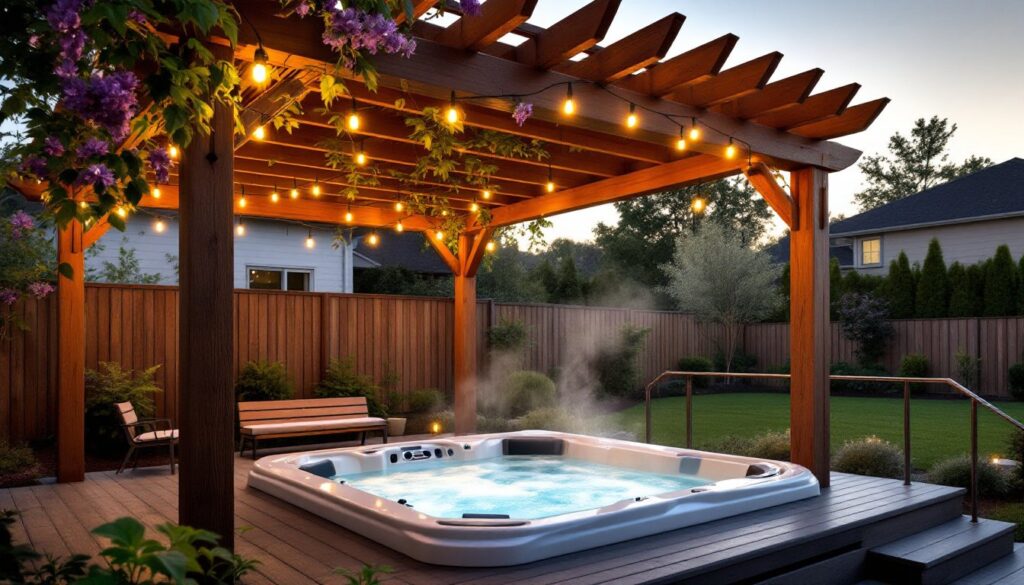
The classic design features evenly spaced 2×10 or 2×12 beams running perpendicular to the posts, with lighter 2×2 or 2×4 rafters crisscrossed overhead. The spacing between rafters (typically 12-24 inches on center) determines how much shade you get, closer spacing means more shade, wider spacing gives you more light and airflow. Many homeowners add a living roof of climbing vines like clematis, wisteria, or grapevines, which provides soft natural shade and cooling through evapotranspiration.
Wood requires maintenance: sanding and resealing every 2-3 years, or painting with exterior-grade deck paint every 3-5 years. Budget for this upfront. The payoff is a design that looks better as it weathers and adapts to your landscape. Photos of wood hot tub pergolas on Houzz show the range of styles possible, from simple post-and-beam to ornate lattice work with built-in benches.
Modern Minimal Pergolas With Clean Lines
If your home has contemporary architecture, a minimalist pergola keeps things sharp and intentional. Modern designs often use wider beam spacing (2-3 feet between rafters), slim profiles, and geometric patterns, think rectangular cutouts or angled slats instead of traditional crisscross work. Materials lean toward aluminum, composite lumber, or stained pressure-treated wood in darker tones (charcoal, dark walnut, or black).
Aluminum pergolas are low-maintenance and engineered for longevity. They don’t rot, warp, or splinter, and they handle UV exposure without fading much. But, they can look cold in some settings and are typically more expensive than wood (expect 30-50% higher cost per linear foot). Powder-coated finishes in matte or satin help them blend better with landscape elements. Expert DIY guidance on pergola construction and design can help you decide between material options and building approaches.
Modern pergolas often incorporate integrated features: recessed lighting in the beams, water misters to cool the surrounding air, or adjustable louvered slats that can open and close. These additions come with complexity, misters require plumbing, louvered systems need motor installation and maintenance, but they’re worth considering if you use your hot tub year-round or in hot climates where summer evenings can feel uncomfortable.
Covered and Semi-Enclosed Pergola Options
If you want more weather protection without a full roof, consider a semi-enclosed design. A common approach is a retractable shade cloth system: UV-resistant fabric (typically 30-50% shade cloth) stretches between the top beams and can roll up or down depending on sun and temperature. These systems cost $1,500-$4,000 installed and require minimal electrical work if you choose manual crank operation rather than motorized. They’re especially useful in regions with intense afternoon sun or where you want flexibility.
Another option is polycarbonate panels set into the pergola frame. These panels diffuse light while blocking UV rays, providing shelter without making the space feel cave-like. Unlike solid roofing, they still drain water through the pergola structure rather than requiring gutters. Panels last 10-15 years and yellow slightly over time, but the durability is excellent. Cost runs $2,000-$5,000 depending on coverage area.
Full roof conversions (shingled or metal) require proper pitch, gutters, flashing, and structural reinforcement to handle water loads and snow load in your region. These cross into contractor territory and almost always need permits and professional engineering. A true outdoor room with a roof is a bigger investment than a pergola, so clarify what you’re really after before committing to a contractor bid.
Pergola Materials and Durability Considerations
Your material choice drives maintenance, cost, and longevity. Pressure-treated lumber is affordable ($10-$20 per linear foot for premium grades) and widely available, but demands regular staining or painting to resist gray weathering. Cedar or redwood cost more ($25-$40 per linear foot) and look beautiful initially, but lack the rot resistance of treated lumber and need aggressive sealing. Composite materials (wood fiber mixed with plastic) cost $30-$50 per linear foot but require almost no maintenance, no painting, no staining, just occasional hosing down.
Fiberglass and PVC offer durability in hot, humid climates where wood rot is a constant battle. They won’t rot, splinter, or attract termites, and UV-stabilized formulations hold color for decades. PVC is lighter and easier to work with than fiberglass, but fiberglass is stronger for large span pergolas. Both cost $40-$70 per linear foot.
Aluminum remains the premium option: zero rot risk, no painting, lightweight, and engineered for precision. Costs range from $50-$100+ per linear foot depending on profile and finish. For a 10×12 pergola, expect materials alone to run $800 (basic treated wood) to $4,000+ (aluminum).
Whatever material you choose, plan for the foundation. Concrete footings are non-negotiable, a wobbly pergola is a dangerous pergola. Posts sunk directly in soil rot out in 2-3 years. Use adjustable post bases or concrete deck blocks rated for your climate. Set posts in a minimum 5-gallon hole with 2-3 feet of concrete below grade. This is not a shortcut moment.
Lighting, Privacy, and Finishing Touches
Lighting transforms your hot tub pergola from daytime asset to evening sanctuary. String lights (Edison bulbs or café lights) are the easiest addition, solar versions avoid trenching electrical lines, though hardwired lights are brighter and more reliable. Drape them along the beams or zigzag between posts, positioning them high enough to provide ambient glow without glare in your soaking eyes. Budget $200-$500 for a simple setup, $800-$1,500 if you’re running conduit and hardwiring through your main panel.
Privacy solutions matter if your hot tub overlooks neighbors. Lattice screens ($100-$300 in materials) add visual interest while obscuring sightlines. Climbing vines soften the look and provide living shade, though fast-growing varieties like clematis need pruning annually. For faster results, install privacy screens or slatted wood panels (vertical 1×6 or 1×8 boards at 45° angles or closely spaced) along one or two sides. Gardenista’s design resources offer inspiring landscape and outdoor living ideas that blend pergolas with privacy plantings.
Heating and comfort matter in cooler climates. Wall-mounted infrared heaters rated for exterior use provide direct radiant warmth without heating the air, ideal for extending hot tub season into fall. Ceiling fans (exterior-rated) improve air circulation on still, hot evenings and help misters work better. Both cost $300-$800 installed but substantially improve usability.
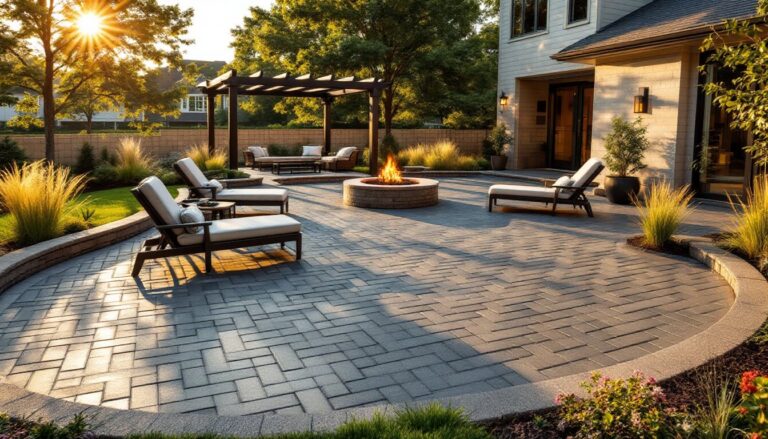
Finally, finish the base. Pavers or composite decking create a non-slip surface around the hot tub, define the space, and prevent mud tracking. A built-in bench or two gives guests seating without cluttering the space. Keep everything weather-sealed and use fasteners rated for exterior use, stainless steel or hot-dipped galvanized, to prevent rust staining.
Conclusion
A well-designed pergola transforms your hot tub from a backyard appliance into an outdoor living destination. Whether you choose classic wood for warmth, aluminum for durability, or a semi-enclosed design for weather protection, the key is matching your material and style to your climate, maintenance capacity, and long-term use. Start with a solid foundation, plan for proper drainage, and don’t skip the finishing touches, lighting, privacy screening, and comfort features turn theory into actual enjoyment. Your future self soaking under the stars will thank you for the investment.